STFU meaning in text is one of the most searched internet slang terms, and for good reason — it can look harsh or confusing the first time you see it in a chat.
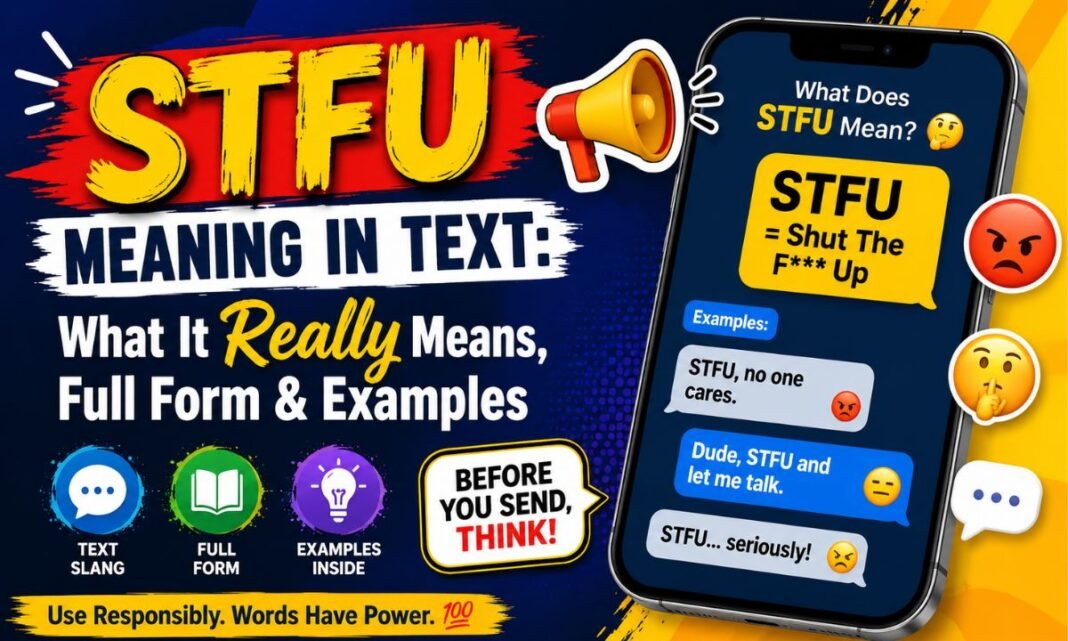
In simple terms, STFU stands for “Shut The F*** Up,” but its real meaning depends heavily on tone, platform, and who’s sending it.
In this guide, you’ll learn the full form of STFU, where it came from, how people actually use it across WhatsApp, Instagram, TikTok, and Snapchat, and how to reply when someone sends it to you.
What Does STFU Meaning in Text? (Full Form & Short Meaning)
STFU means “Shut The F*** Up.” It’s internet slang used to tell someone to stop talking, though the tone changes depending on context.
The short meaning is simple: be quiet, or stop talking. But among friends, it often works differently — expressing shock, excitement, or disbelief instead of a literal command.
For example, “STFU, you got the job?!” isn’t asking someone to be silent. It’s reacting to good news with surprise.
This dual nature is exactly why so many people search for its meaning — the words look aggressive, but the actual use is often harmless.
STFU is informal by nature. It fits texting, gaming chats, and social media comments, but it has no place in professional emails, schoolwork, or workplace messages.
Origin & History of STFU
STFU started in early internet chat rooms and online gaming communities in the late 1990s and early 2000s.
As typing speed mattered more in fast-paced chats, users shortened long phrases into acronyms. “Shut the f*** up” became STFU because it was quicker to type during arguments, gaming matches, or heated forum debates.
The abbreviation also helped users get around basic chat filters that blocked full profanity, since the letters alone slipped past most moderation systems.
Over time, STFU moved from niche gaming and forum slang into mainstream platforms — Twitter (now X), Instagram, TikTok, and Discord all helped push it into everyday online language.
Today, it’s one of the most recognized slang acronyms online, understood across generations even by people who don’t use it themselves.
How People Use STFU in Daily Conversations
Tone is everything with STFU. The same four letters can mean very different things depending on how they’re used.
Angry Use
Used during arguments or heated exchanges. Sounds blunt, aggressive, and is meant to shut down the conversation.
Funny or Playful Use
Common between close friends reacting to something silly or unexpected. Example: “STFU 😂 you didn’t actually do that.”
Shock or Disbelief
The most common modern usage — expressing surprise at unbelievable news.
Reading the relationship and the emojis around it tells you which one you’re dealing with. Without context, assume it could go either way.
STFU Meaning in text Across WhatsApp, Instagram, TikTok & Snapchat
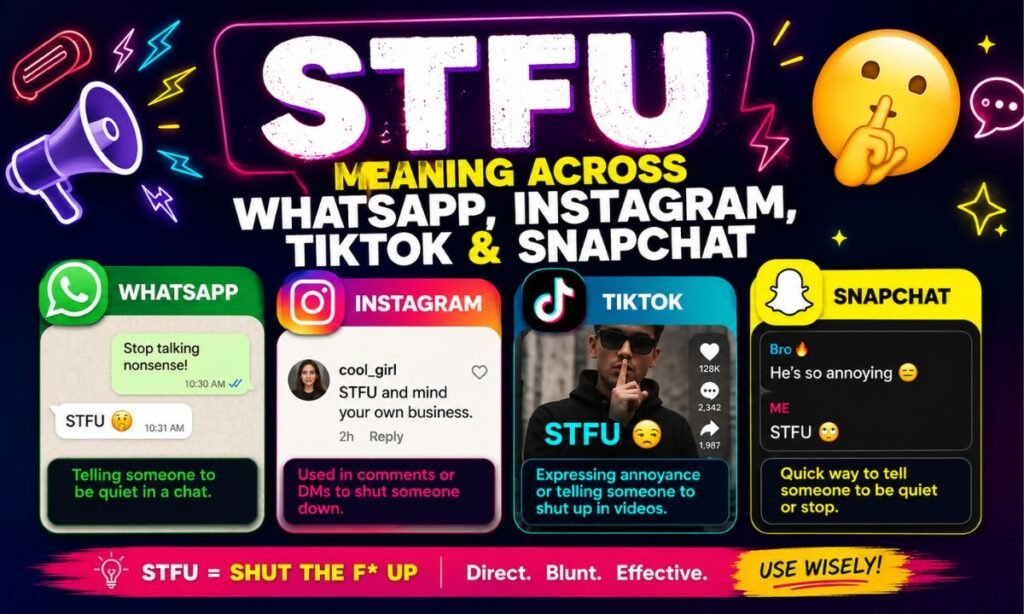
The core meaning of STFU stays the same everywhere, but the tone shifts slightly by platform.
WhatsApp — Mostly private chats between friends. Can be a joke or a genuine reaction depending on the conversation history.
Instagram — Frequently seen in comments and DMs, usually reacting to something surprising or funny rather than literally telling someone to be quiet.
TikTok — Extremely common in comment sections under shocking or impressive videos. Almost always expresses amazement, not anger.
Snapchat — Used casually in snaps and chats between friends, often playful, especially when reacting to gossip or surprising updates.
On public platforms like TikTok and Instagram, STFU leans more toward excitement and humor. In private one-on-one chats, it’s more likely to reflect real frustration if used during a disagreement.
STFU Meaning in a Relationship
In a relationship, STFU usually depends on the emotional tone of the conversation rather than having one fixed meaning.
Used playfully, it can mean disbelief or flattery — for example, a partner saying “STFU, you didn’t have to do all this” after receiving a surprise gift. Here it expresses being touched or amazed, not annoyance.
Used during an argument, it can signal real frustration or an attempt to shut down the conversation. This use is more likely to come across as dismissive or hurtful between partners.
Context clues matter: emojis, punctuation, and the conversation leading up to it usually make the intent clear.
After a compliment reads very differently from a flat “STFU.” during a disagreement.
If it’s used to shut down a serious conversation repeatedly, that’s worth addressing directly with your partner rather than assuming it’s always a joke.
STFU Meaning in Anime & Fandom Comments
In anime and fandom spaces, STFU shows up constantly in comment sections, fan forums, and social media reactions to plot twists, character reveals, or unexpected deaths.
Here, it almost always expresses shock or intense reaction to a storyline — not literal anger.
Example:
This reflects disbelief and emotional investment in the show, a very common reaction style in anime fan communities.
It’s also used humorously to react to fan theories, memes, or unexpected character pairings. Fandom culture leans heavily on exaggerated reactions, and STFU fits naturally into that style of commenting.
Because anime fan spaces are often younger, fast-paced, and meme-driven, STFU here functions almost entirely as an expression of excitement rather than hostility.
STFU Meaning in Filipino Texting
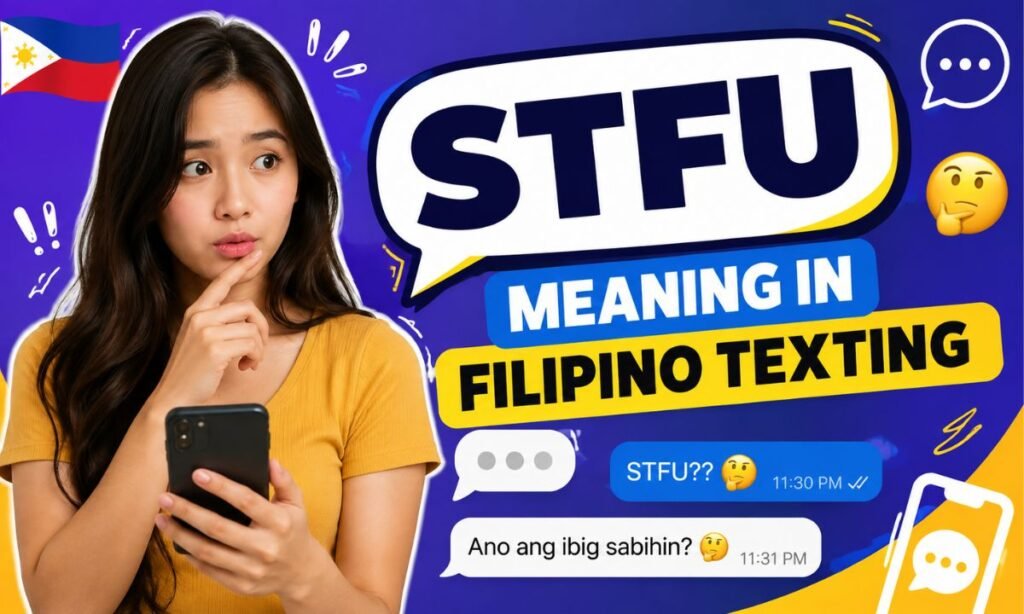
STFU is also commonly used in Filipino texting and social media, often mixed naturally into Taglish (Tagalog-English) conversations.
The meaning stays consistent with global usage — “Shut The F*** Up” — but Filipino users frequently soften it with humor, emojis, or playful phrasing rather than using it aggressively.
Example:
(“STFU, you actually got the job!”) — used here to express excitement, similar to how it’s used in English-language chats.
It’s common in group chats among friends, Facebook comments, and Twitter/X replies, especially reacting to surprising or funny local news, memes, or personal updates.
As with English usage, STFU in Filipino texting is rarely meant literally among friends — tone and relationship still decide whether it reads as playful or rude.
Common Confusions & Wrong Interpretations
Many people misread STFU because they take it at face value without checking the tone.
Assuming it always means anger — In reality, most modern usage on social media leans toward shock or excitement, not hostility.
Mistaking it for a different meaning — There’s no widely accepted alternate or professional meaning for STFU. Outside slang, it doesn’t stand for anything else.
Reading it the same way across every platform — As covered earlier, tone shifts by platform and relationship. The same message can be a joke on TikTok and an insult in a one-on-one argument.
Confusing it with similar-looking acronyms — Terms like STHU (“Shut The Heck Up”) or GTFO (“Get The F*** Out”) get mixed up with STFU despite meaning different things.
The safest approach: check emojis, punctuation, and the message before it. Context almost always clears up the confusion.
Similar Terms & Alternatives to STFU
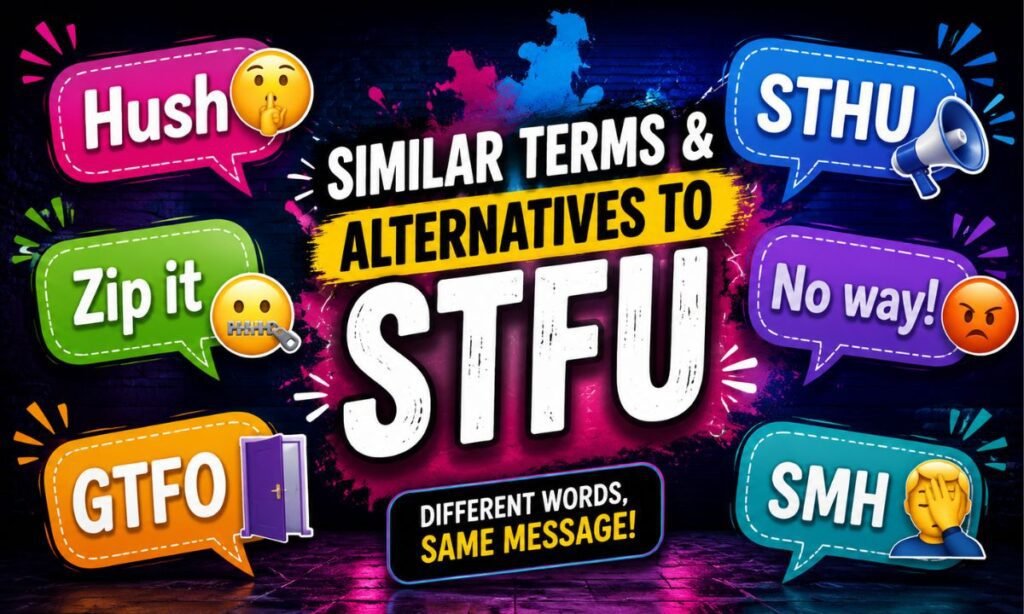
If you’re looking for softer or related expressions, here’s how STFU compares:
| Term | Meaning | Tone |
| Hush | Be quiet | Gentle |
| Zip it | Stop talking | Playful or firm |
| GTFO | Get out entirely | Aggressive |
| STHU | Shut the heck up | Milder version of STFU |
| No way! | Disbelief | Friendly, no command |
| SMH | Shaking my head | Disappointment, not a command |
If you want to express surprise without sounding harsh, “no way,” “seriously?,” or “I can’t believe it” carry the same shock value as STFU without the profanity.
Real Chat Examples of STFU meaning in text
Seeing STFU in different situations makes the tone shift easier to spot:
Notice the pattern: emojis and exclamation points almost always signal a positive or joking tone, while a flat period at the end usually signals real annoyance.
How to Reply When Someone Says STFU
Your reply should match the tone you’re picking up on.
Funny Replies
- “Make me 😎”
- “No u 😂”
Friendly Replies
- “Haha okay, I’ll stop”
- “Fine, fine, moving on”
Neutral Replies
- “Okay”
- “Got it”
Formal Context (rare) If it’s used inappropriately, or by someone you don’t know well:
- “Let’s keep this respectful.”
- “I’d prefer we talk this through calmly.”
If you’re unsure how it was meant, a light “haha why” or “what’d I say 😅” often clears things up without escalating anything.
Can Using STFU Get You Reported or Blocked?
On most platforms, a single use of STFU in a joking context won’t trigger any moderation action — it’s extremely common and rarely flagged on its own.
However, repeated use directed at someone in an aggressive or harassing way can violate community guidelines on platforms like Instagram, TikTok, and Discord, especially if the recipient reports it as harassment.
Context matters to moderation systems too: automated filters are far more likely to flag STFU when it appears alongside other aggressive language, repeated messaging, or reported abuse patterns — not as an isolated comment.
In group chats or public comment sections, using it as an exaggerated reaction (“STFU this is amazing”) carries essentially no risk. Using it repeatedly toward one person in DMs, especially a stranger, is where it can cross into reportable territory.
Is STFU Still Popular? Trends & Usage
Yes — STFU remains one of the most recognized slang acronyms online in 2026.
Where it’s most active:
- TikTok comment sections
- Gaming voice/text chats
- Instagram and Snapchat between friends
- Meme culture broadly
Who uses it most: Teenagers, young adults, and online gamers use it most frequently, though it appears across age groups in casual digital spaces.
It’s not new slang, but its meaning has shifted over time — leaning more toward excitement and reaction than literal hostility, especially among younger users who treat it as an emotional intensifier rather than a command.
Quick Facts Section
| Factor | Details |
| Meaning | Shut The F*** Up |
| Category | Internet slang |
| Tone | Angry, playful, or shocked — depends on context |
| Common platforms | WhatsApp, Instagram, TikTok, Snapchat, Discord |
| Popularity | High, especially among teens and young adults |
| Formal use | Never appropriate |
Frequently Asked Questions
What does STFU meaning in text?
STFU stands for “Shut The F*** Up.” It’s used to tell someone to stop talking, though it often expresses shock or excitement instead, depending on context.
Is STFU rude?
It can be. The literal meaning is harsh, but among friends it’s frequently used jokingly to react to surprising or funny news rather than as a real insult.
What does STFU mean in a relationship?
It usually reflects the emotional tone of the moment — playful surprise (“STFU, you did all this for me?”) or genuine frustration during an argument. Context and emojis usually make the intent clear.
Is STFU used the same way on every platform?
Not exactly. On TikTok and Instagram it usually signals excitement or disbelief. In private one-on-one chats, especially during disagreements, it’s more likely to be genuinely dismissive.
Can STFU be used in Filipino or other non-English texting?
Yes. It’s commonly mixed into Taglish and other non-English chats, usually softened with emojis or humor and used the same way as in English — mostly to express excitement rather than anger.
Conclusion
STFU meaning in text ultimately comes down to context. While it literally stands for “Shut The F*** Up,” most modern usage — especially on TikTok, Instagram, and Snapchat — leans toward shock, excitement, or humor rather than real hostility.
Reading the tone, emojis, and relationship behind the message is the fastest way to know whether it’s a joke or genuine frustration. Whatever the intent, it’s best kept in casual chats among friends and avoided entirely in professional or formal conversations.