Have yWhat Does Situationship Mean? Meaning, Signs, Examples, and What to Doou ever been close to someone, talked almost every day, spent time together, flirted, shared personal things, and even acted like a couple—but when someone asked, “So, what are you two?” you had absolutely no idea what to say?
If the answer is yes, you may have been in a situationship.
The word “situationship” has become increasingly common in modern dating conversations, especially on social media. It describes a romantic or emotionally intimate connection that feels like a relationship but does not have a clear relationship label or commitment.
A situationship can be exciting because there is attraction, companionship, and freedom. But it can also become confusing and emotionally exhausting when one person wants more clarity than the other.
So, what exactly does situationship mean? How can you tell if you are in one? And what should you do if you want something more serious?
Let’s take a closer look.
What Does Situationship Mean?
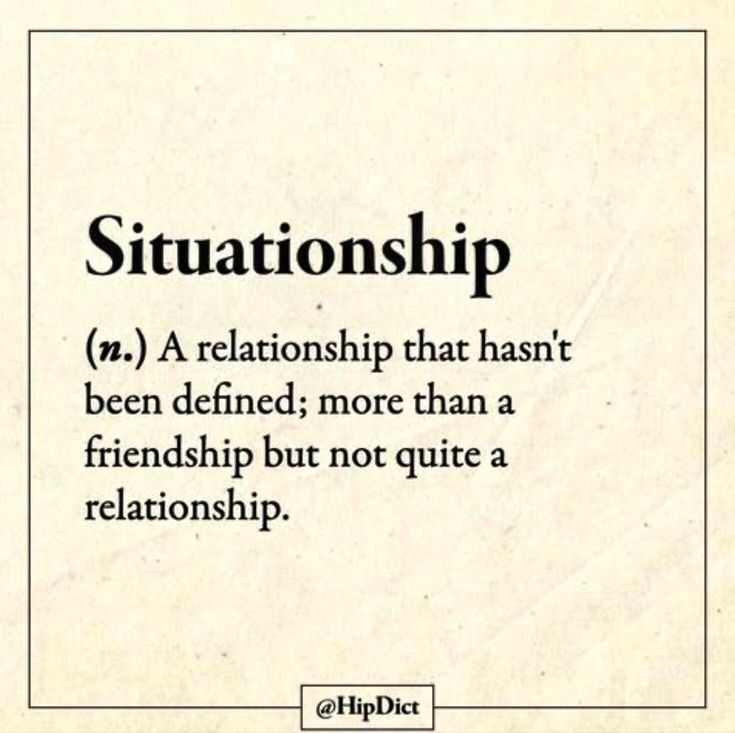
A situationship is an undefined romantic or sexual relationship where two people have some level of emotional or physical connection but have not clearly agreed that they are in an official relationship.
In simpler words, a situationship is often:
“We are more than friends, but we are not officially a couple.”
There may be regular texting, dates, flirting, physical intimacy, emotional support, and even jealousy. However, there may be no clear commitment or agreement about what the relationship actually is.
For example, imagine two people who text each morning, see each other several times a week, go out for dinner, kiss, spend nights together, and tell each other personal things.
They clearly have a connection.
But when one person asks, “Are we together?” the answer is something like:
“I don’t know. Let’s just see where things go.”
That is a classic situationship.
Where Does the Word “Situationship” Come From?
The word situationship combines the words “situation” and “relationship.”
It essentially describes a relationship-like situation without the traditional definition of a relationship.
The term became especially popular as modern dating changed. Dating apps, social media, casual dating, and changing attitudes toward relationships have created more possibilities between being completely single and being officially committed.
Today, people may casually date, talk to several people, become emotionally close without becoming exclusive, or maintain a connection without deciding what it should become.
The word situationship gives people a way to describe that gray area.
What Does a Situationship Look Like?
Situationships do not all look the same.
One might involve two people who casually meet for dates but do not want commitment. Another might involve people who have strong feelings for each other but are afraid to define the relationship.
Some common characteristics include:
- Regular texting or calling
- Romantic or sexual attraction
- Spending significant time together
- Going on dates
- Physical intimacy
- Emotional closeness
- Little or no discussion about commitment
- Unclear expectations
- Uncertainty about exclusivity
- Avoiding relationship labels
The important thing is that there is usually a relationship-like connection without relationship-level clarity.
Signs You Might Be in a Situationship
Sometimes a situationship develops so gradually that you do not realize what is happening until you are already emotionally invested.
Here are some common signs.
1. You Act Like a Couple but Do Not Call Yourselves a Couple
You might do many things couples normally do.
You spend weekends together. You meet each other’s friends. You talk every day. You go on dates. You might even celebrate birthdays or special occasions together.
Yet neither person calls the other their partner.
There is a gap between what you do and what you call the relationship.
2. You Are Unsure Where You Stand
One of the biggest signs of a situationship is uncertainty.
You may constantly wonder:
“Does this person actually like me?”
“Are we exclusive?”
“Are they seeing other people?”
“Are we becoming a couple?”
“What exactly are we?”
If you spend more time guessing than communicating, the relationship may be stuck in an undefined space.
3. You Avoid the “What Are We?” Conversation
Sometimes both people know that the conversation needs to happen, but neither wants to start it.
You might be afraid that asking for clarity will scare the other person away.
They might be afraid that defining the relationship will create expectations.
So both people continue as they are.
Unfortunately, avoiding the conversation does not make the uncertainty disappear.
4. There Is Emotional Intimacy Without Commitment
You may tell this person things you do not tell everyone else.
They know your worries, dreams, family problems, personal struggles, and daily routines.
You may depend on each other emotionally.
But despite this closeness, there is no clear commitment.
This can become particularly difficult because emotional intimacy often creates expectations even when nobody has officially agreed to them.
5. The Future Is Always Vague
In a situationship, conversations about the future may sound uncertain.
For example:
“We’ll see.”
“Let’s not rush anything.”
“I’m just enjoying the moment.”
“Let’s see where this goes.”
These statements are not automatically bad. Some people genuinely need time.
But if months pass and nothing becomes clearer, the uncertainty may be telling you something.
Situationship vs. Relationship
The biggest difference between a situationship and a traditional relationship is usually clarity and commitment.
In an official relationship, two people generally understand that they are together and have some shared expectations about the relationship.
In a situationship, those expectations may be unclear.
For example:
Relationship:
“We are together and exclusive.”
Situationship:
“We spend a lot of time together, but we haven’t talked about what we are.”
A situationship does not necessarily mean the connection is fake. The feelings may be completely genuine.
The difference is that the relationship has not been clearly defined.
Situationship vs. Talking Stage
A situationship and a talking stage can look very similar, but they are not exactly the same.
The talking stage is generally the early period when two people are getting to know each other romantically.
A situationship often goes further.
The people involved may already have an established emotional, romantic, or physical connection, but they remain undefined.
Think of it this way:
Talking stage: “We’re getting to know each other.”
Situationship: “We’ve been doing this for a while, but we still don’t know what we are.”
Of course, people use these terms differently, so there is no strict rule.
Why Do People Get Into Situationships?
There are many reasons situationships happen.
Fear of Commitment
Some people enjoy closeness but become uncomfortable when a relationship starts becoming serious.
They may want companionship without the responsibilities or expectations associated with commitment.
Different Relationship Goals
One person may want a serious relationship while the other wants something casual.
Instead of discussing the difference openly, they continue seeing each other.
Convenience
A situationship can feel comfortable.
You have someone to talk to, spend time with, and share affection with without necessarily having the responsibilities of a committed relationship.
Uncertainty
Sometimes neither person knows what they want.
They genuinely like each other but are unsure whether they are compatible for a long-term relationship.
Fear of Losing the Connection
Some people avoid defining a relationship because they are afraid that asking for more could cause the other person to leave.
They may think:
“If I don’t ask for commitment, at least I can keep what we have.”
Unfortunately, staying silent can sometimes create even more emotional pain later.
Are Situationships Always Bad?
No.
A situationship is not automatically unhealthy.
Two adults can knowingly agree to have a casual, undefined connection, as long as both people understand the arrangement and are comfortable with it.
The problem usually begins when the two people want different things but do not communicate about it.
For example, if one person is happy with something casual and the other secretly hopes it will become a serious relationship, the situation can become painful.
The issue is not necessarily the lack of a label.
The issue is a lack of shared expectations.
The Emotional Side of Situationships
Situationships can be emotionally complicated because they often provide some of the benefits of a relationship without the security of one.
You may receive affection, attention, companionship, and intimacy.
But you may not receive reassurance, commitment, consistency, or a clear place in the other person’s life.
That combination can create an emotional roller coaster.
One day you may feel incredibly close.
The next day, you may wonder whether they even see you as important.
You might feel happy when they text you but anxious when they become distant.
Over time, this uncertainty can become exhausting.
What to Do If You Are in a Situationship
If you are comfortable with the arrangement, you do not necessarily need to change anything.
But if you are unhappy or constantly confused, it is worth taking action.
Be Honest With Yourself
Before talking to the other person, ask yourself what you actually want.
Do you want a committed relationship?
Are you comfortable with something casual?
Are you hoping they will eventually change their mind?
Would you be happy if nothing about the relationship changed for another six months?
These questions can help you understand your own needs.
Talk About It
You do not need to make the conversation dramatic.
You can simply say:
“I really enjoy spending time with you, but I’d like to understand what this relationship means to you.”
Or:
“I’ve developed feelings for you, and I want to know whether we’re moving toward something more serious.”
A mature conversation gives both people an opportunity to be honest.
Pay Attention to Actions
Someone can tell you that they like you while behaving in a completely different way.
Look at consistency.
Do they make time for you?
Do they respect your boundaries?
Do they communicate?
Do they make plans?
Do they include you in their life?
Do they show interest in your future?
Actions do not tell you everything, but they can reveal whether someone’s behavior matches their words.
Set Boundaries
If you know that an undefined relationship is hurting you, you have the right to establish boundaries.
You can say:
“I care about you, but I don’t think this arrangement is working for me anymore.”
Setting a boundary is not an attempt to control another person.
It is a way of protecting your own emotional well-being.
What If They Do Not Want a Relationship?
This can be one of the hardest parts.
Imagine you ask for clarity and they tell you:
“I really like you, but I don’t want a relationship.”
It can be tempting to stay and hope that they eventually change their mind.
Maybe they will.
But you should make decisions based on what they are telling you now, not on what you hope they will say someday.
If you want a committed relationship and they do not, that does not mean either person is wrong.
It means your relationship goals may not match.
Sometimes the healthiest decision is to walk away rather than waiting for someone to become ready.
How to Avoid Getting Stuck in a Situationship
There is no guaranteed way to avoid situationships completely, but communication can make a huge difference.
Early in the connection, pay attention to what someone says they want.
You do not need to ask for marriage on the first date.
But you can have honest conversations about dating intentions.
You can also watch for consistency.
If someone repeatedly tells you they do not want anything serious, believe them.
If someone avoids every conversation about commitment, take that seriously too.
And most importantly, do not ignore your own needs just because you are afraid of losing someone.
Common Situationship Examples
Here are a few everyday examples.
Example 1:
You text each other every day and meet every weekend, but neither of you has discussed exclusivity.
Example 2:
You are physically intimate and emotionally close, but the other person says, “I don’t want labels.”
Example 3:
You behave like a couple around friends but describe each other as “just friends” when someone asks.
Example 4:
You have been seeing each other for months, but every conversation about the future gets avoided.
Example 5:
One person considers the connection casual while the other person has already developed serious feelings.
These are all possible situationships, although every relationship should be judged based on its specific circumstances.
Frequently Asked Questions About Situationships
Is a situationship a relationship?
Not necessarily. A situationship is generally an undefined romantic connection that has some relationship-like qualities but lacks clear commitment or labels.
Can a situationship turn into a relationship?
Yes. Some situationships eventually develop into committed relationships when both people decide they want the same thing.
Can you love someone in a situationship?
Absolutely. Feelings do not require an official relationship label. A person can develop genuine love and emotional attachment even when the relationship is undefined.
How long can a situationship last?
There is no fixed timeline. A situationship can last days, weeks, months, or even years. The important question is whether both people are comfortable with the arrangement.
Is a situationship toxic?
Not automatically. It becomes unhealthy when there is dishonesty, manipulation, disrespect, persistent emotional distress, or a major mismatch between what the people involved want.
How do I end a situationship?
Be honest and direct. Explain that the current arrangement is no longer working for you, communicate your boundary, and give yourself space to move forward if necessary.
Final Thoughts
A situationship is more than simply “not having a label.” It is a relationship-like connection where the expectations, commitment, or future are unclear.
For some people, that arrangement works perfectly well. They enjoy the connection without wanting a traditional relationship.
For others, it becomes painful because they want something deeper but are afraid to ask for it.
The most important thing is to understand what you want.
Do not stay in an undefined relationship simply because you are afraid that asking for clarity will make someone leave.
The right person for you should not require you to constantly guess where you stand.
You deserve a connection where affection, effort, communication, and expectations can be discussed openly.
And remember: being in a situationship is not necessarily the problem. Staying in one that consistently makes you unhappy is worth reconsidering.
Sometimes the most important relationship conversation is simply asking, “What are we?” and being brave enough to accept the answer.