You saw “IMYT” in a text and had no idea what it meant. Maybe it came from a friend, a crush, or a comment on Instagram. You didn’t want to look clueless by asking, so you searched it instead.
This guide gives you the IMYT meaning, real examples from texts and social media, and when it’s actually okay to use it. By the end, you’ll never pause on this abbreviation again.
What Does IMYT Mean?
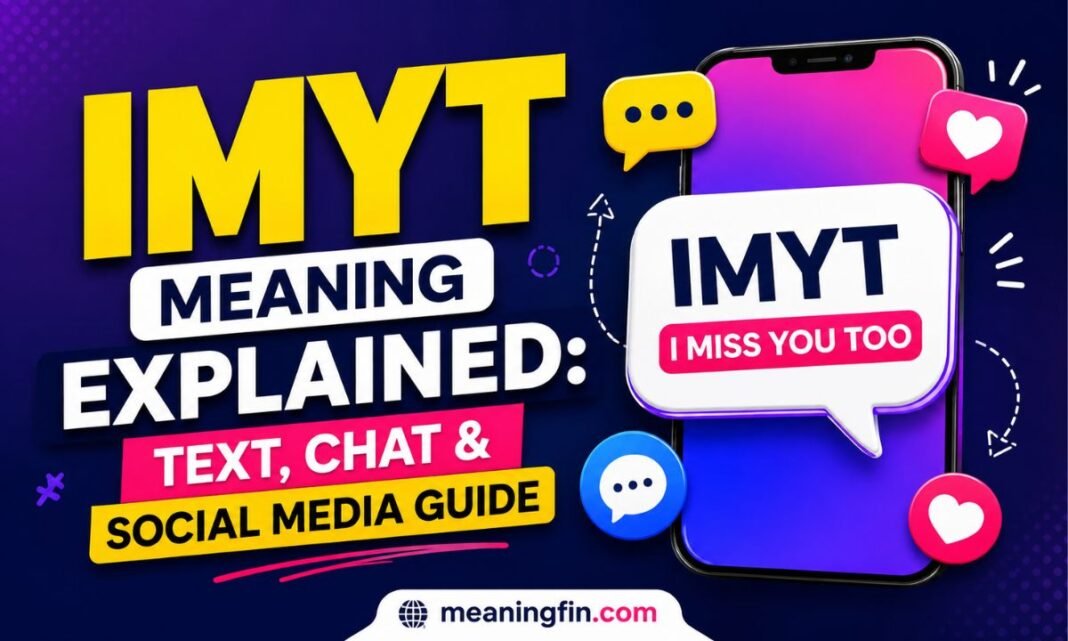
IMYT stands for “I Miss You Too.” It’s a short reply people send when someone tells them they’re missed.
Instead of typing the full sentence, texters shorten it to keep the conversation quick without losing the feeling behind it.
Example: A: “I miss you” B: “imyt ❤️”
IMYT is almost always a reciprocal message. It only makes sense as a reply — someone says they miss you first, and you send IMYT back to show the feeling is mutual.
It’s part of a bigger family of texting shorthand, similar to how “ILY” replaces “I love you” or “BRB” replaces “be right back.” The goal is speed, not laziness — the emotion stays intact even though the typing is shorter.
You’ll mostly see it in personal, casual conversations. It’s not slang with hidden or ironic meanings — what you see is what it means. There’s no widely recognized alternate definition for IMYT outside of texting, so if you’ve come across it in a chat, “I Miss You Too” is almost certainly the answer.
Where Is IMYT Used? (Chat, Snapchat, Instagram & Social Media)
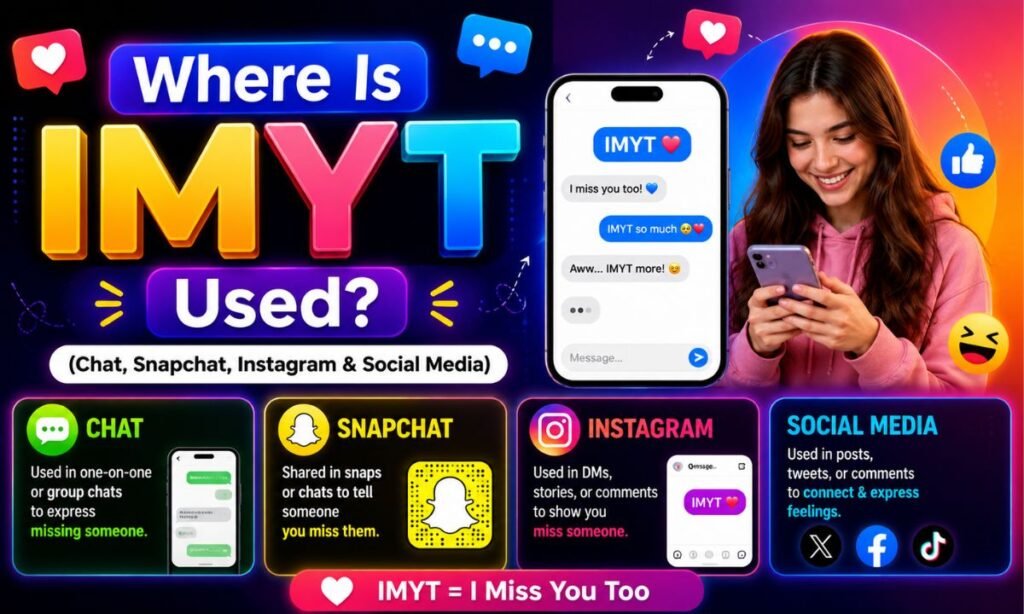
IMYT shows up wherever people text casually, especially on mobile-first platforms where speed matters more than formality.
| Platform | How It’s Used |
| Text/SMS | Direct reply to “I miss you” |
| Snapchat | Common in streaks and private chats |
| Used in DMs, comments, and story replies | |
| Personal chats between friends, couples, or family | |
| TikTok | Occasional use in comments or DMs |
The tone stays fairly consistent across all of these — casual, warm, and personal. What changes is the setting: on Snapchat it often shows up mid-streak, on Instagram it’s more common in DMs than public comments.
One thing stays true everywhere: IMYT is built for personal spaces, not public or professional ones. You won’t see it used in a brand caption or a customer service chat, because the phrase only works when there’s a real emotional exchange happening between two people.
Real Conversation Examples
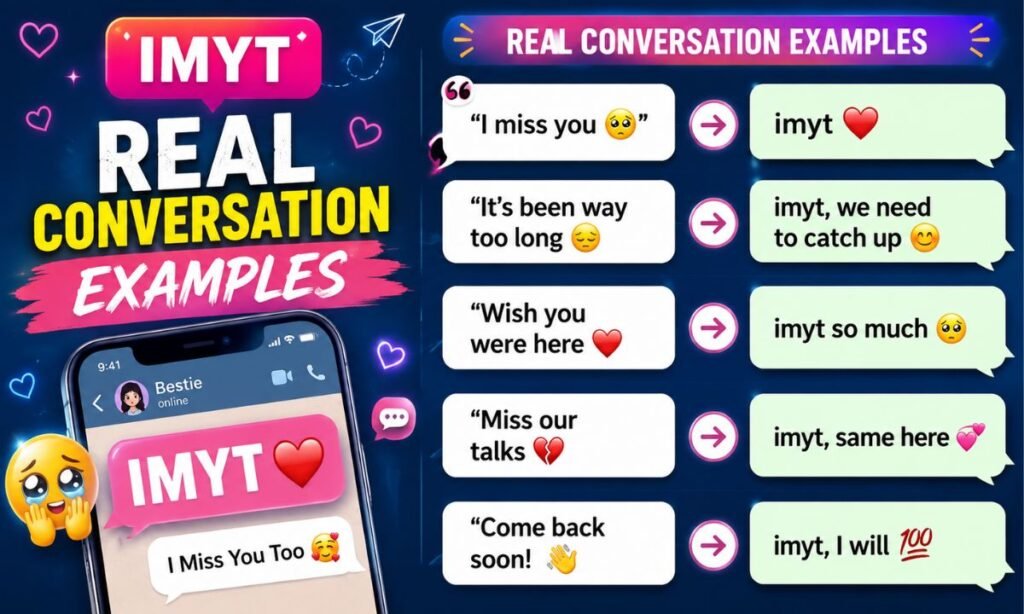
Seeing IMYT in context makes the meaning click faster than any definition alone.
- “I miss you 🥺” → “imyt ❤️”
- “It’s been way too long” → “imyt, we need to catch up”
- “Wish you were here” → “imyt so much”
- “Miss our talks” → “imyt, same here”
- “Come back soon!” → “imyt, I will”
Notice the pattern — IMYT never starts a conversation. It always responds to someone expressing that they miss the other person first.
The tone can shift slightly depending on who’s texting. Between close friends, it feels light and casual. Between partners or in a long-distance relationship, it usually carries more emotional weight. Either way, the core meaning doesn’t change — only the intensity behind it does.
IMYT vs IMY vs IMU – What’s the Difference?
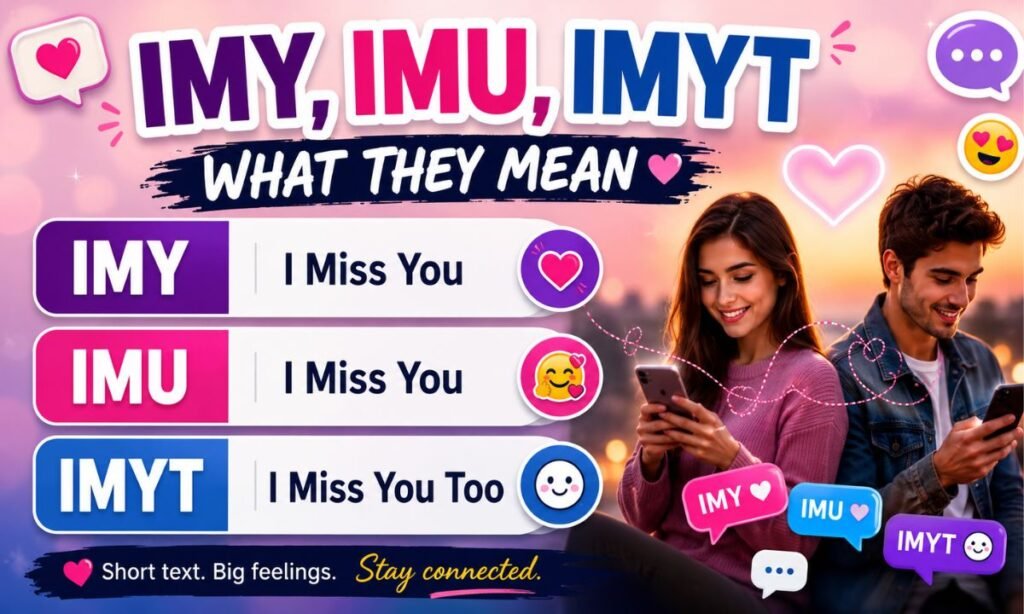
These three abbreviations look almost identical, which is exactly why people mix them up.
| Term | Meaning | When It’s Used |
| IMY | I Miss You | Said first, to express you miss someone |
| IMU | I Miss You | Same as IMY, alternate spelling |
| IMYT | I Miss You Too | Said as a reply, to return the feeling |
The easiest way to remember the difference: IMY and IMU start a message. IMYT replies to one.
If someone texts you “IMY” and you reply with “IMY” back, it reads a little oddly — like you’re both saying it independently instead of responding to each other. “IMYT” fixes that by making it clear you’re replying directly to what they said. Getting this right matters more than it seems, especially in emotional conversations where the wrong abbreviation can make a reply feel slightly off or impersonal.
Does Punctuation or Tone Change IMYT Meaning?
The core meaning of IMYT never changes, but punctuation and formatting shift how it feels.
- “imyt” (lowercase, no punctuation) — casual, low-key, relaxed
- “IMYT!” — more enthusiastic or excited
- “imyt 🥺” — softer, more emotional or vulnerable
- “imyt…” (with trailing dots) — can read as wistful or bittersweet
- “IMYT” (all caps, no emoji) — can feel more intense or serious depending on context
None of these change what IMYT stands for. What they change is the emotional weight behind it. A single lowercase “imyt” between friends reads very differently from “IMYT 🥺❤️” in a romantic conversation, even though both mean the exact same thing on paper.
This is worth paying attention to, because texting relies heavily on these small visual cues to replace tone of voice. Reading the punctuation alongside the words gives you a much more accurate sense of how someone actually feels.
When to Use and When NOT to Use IMYT
Context decides whether IMYT lands well or feels out of place.
When to Use
- Replying to a friend who says they miss you
- Romantic or long-distance relationship chats
- Catching up with family after time apart
- Casual social media replies (DMs, story replies)
When NOT to Use
- Professional emails or work chats
- Formal or official communication
- Conversations with people you don’t know well
- Any context where a full, sincere sentence would land better
The short version: IMYT belongs in personal, casual spaces. It’s built for quick emotional exchanges, not formal ones. Sending it to a close friend feels natural. Sending it in a work Slack message would feel out of place and unprofessional.
Common Mistakes People Make With IMYT
A few small mix-ups come up often with this abbreviation.
- Using it to start a conversation — IMYT only works as a reply, not an opener.
- Confusing it with IMY or IMU — these mean “I miss you,” not “I miss you too.”
- Assuming it always means romance — it’s used just as often between friends and family.
- Sending it in professional contexts — it reads as too casual for work or formal messages.
- Overusing it without feeling — like any expression, repeating it constantly can make it lose its meaning.
Most of these mistakes come from treating text abbreviations as interchangeable. Each one carries a slightly different function, and IMYT specifically only makes sense as a response to someone else’s message.
Similar Slang Words (with Comparison Table)
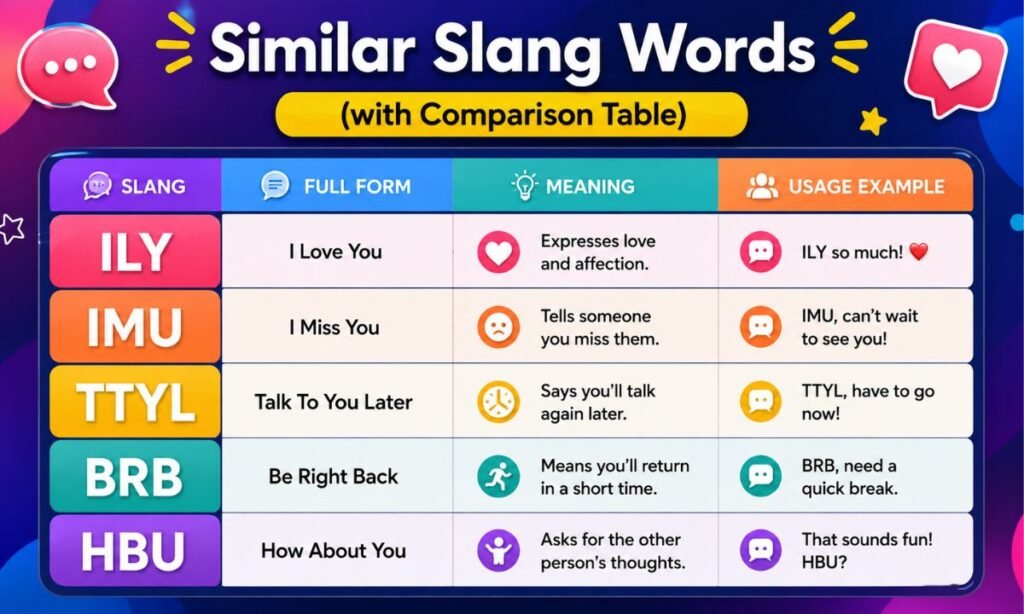
A few related abbreviations often show up in the same conversations as IMYT.
| Slang | Meaning | Best Used For |
| ILY | I Love You | Romantic or close relationships |
| IMU | I Miss You | Starting a message about missing someone |
| TTYL | Talk To You Later | Ending a chat |
| BRB | Be Right Back | Temporary pause in conversation |
| HBU | How About You | Returning a question |
IMYT stands out from this list because it’s specifically reciprocal — it only makes sense as a response to someone else’s “I miss you.” The others can be used more freely, but IMYT always needs that first message to reply to.
Frequently Asked Questions
What does IMYT mean in text?
IMYT means “I Miss You Too.” It’s a quick, emotional reply used when someone tells you they miss you.
Is IMYT only used romantically?
No. It’s common between friends and family members too, not just romantic partners.
What’s the difference between IMYT and IMY/IMU?
IMY and IMU mean “I miss you” and are used to start a message. IMYT means “I miss you too” and is used as a reply.
Can IMYT be used casually with friends?
Yes. Between friends, it usually feels light and casual rather than deeply emotional.
Is it okay to use IMYT in a professional or work chat?
No. It’s too casual for formal or professional communication and is best kept for personal conversations.
Conclusion
IMYT simply means “I Miss You Too” — a quick, warm reply used when someone tells you they miss them. It works across texts, Snapchat, Instagram, and WhatsApp, and its tone shifts slightly depending on punctuation and who you’re talking to.
The next time someone sends you “IMYT,” you’ll know exactly what they mean and exactly how to respond.