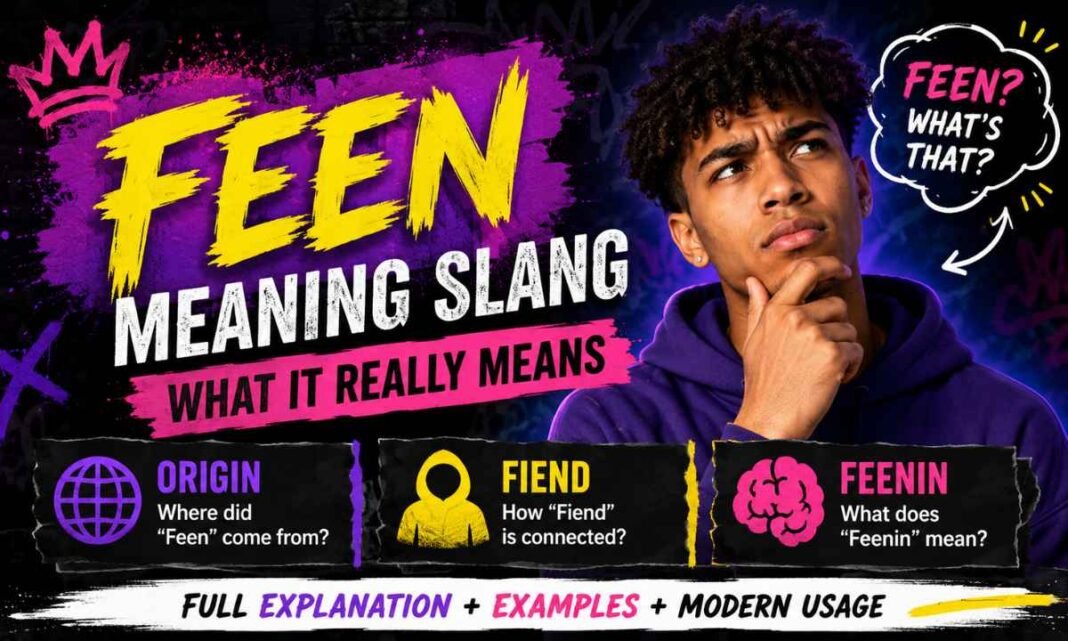
Feen meaning slang comes down to one simple idea: wanting something so badly it looks almost obsessive, usually said with a laugh rather than judgment. You’ve probably seen the word in a text, a TikTok comment, or a caption that reads “feenin’ for the weekend,” and wondered if you were reading it right. It looks like a typo at first, but it’s a real, widely used term with roots that go back decades.
Feen isn’t just slang someone invented last year. It traces back to the standard word fiend, shaped by hip hop culture and reshaped again by Gen Z online. It even carries a completely separate meaning in Irish slang that has nothing to do with craving at all. Once you know where it comes from, you’ll never second guess it again.
What Is a Feen in Slang?
A feen is someone who craves something intensely, whether that’s food, attention, a video game, or a person. It’s usually said with humor rather than judgment. If your friend can’t stop checking their phone for a text back, you might jokingly call them a feen.
The word works as both a noun (“he’s a feen”) and a verb (“I’m feenin’ for tacos”). Context always decides the tone.
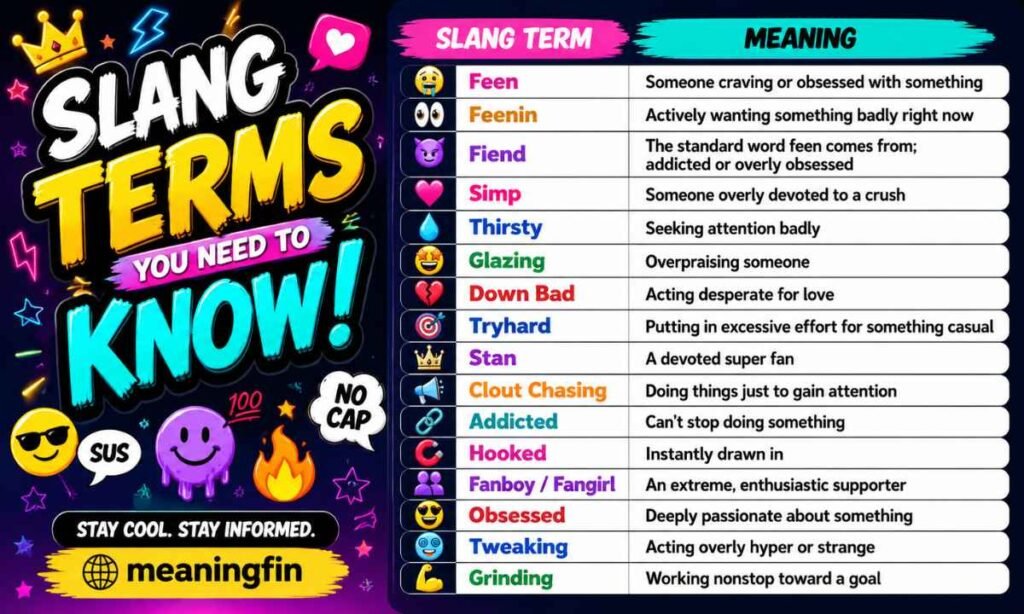
Quick Reference Table
Here’s a fast breakdown of feen and the slang terms closest to it in meaning.
| Slang Term | Meaning | Tone | Common Setting |
| Feen | Someone craving or obsessed with something | Playful, teasing | Texts, TikTok, gaming chats |
| Feenin | Actively wanting something badly right now | Casual | Captions, group chats |
| Fiend | The standard word feen comes from; addicted or overly obsessed | Slightly harsher | Formal and informal writing |
| Simp | Someone overly devoted to a crush | Teasing | Social media |
| Thirsty | Seeking attention badly | Mocking | Comments, DMs |
| Glazing | Overpraising someone | Sarcastic | Streaming, sports talk |
| Down Bad | Acting desperate for love | Humorous | TikTok, memes |
| Tryhard | Putting in excessive effort for something casual | Critical | Gaming |
| Stan | A devoted super fan | Positive | Fandom spaces |
| Clout Chasing | Doing things just to gain attention | Negative | Social media |
| Addicted | Can’t stop doing something | Neutral | Everyday speech |
| Hooked | Instantly drawn in | Friendly | Everyday speech |
| Fanboy / Fangirl | An extreme, enthusiastic supporter | Playful | Fandom, product talk |
| Obsessed | Deeply passionate about something | Neutral | Everyday speech |
| Tweaking | Acting overly hyper or strange | Humorous | Group chats |
| Grinding | Working nonstop toward a goal | Motivational | Gaming, hustle culture |
Feen
The core feen meaning slang usage describes someone with an intense craving. It’s the shortened, phonetic spelling of fiend, and it usually shows up as a light jab between friends rather than a real insult.
One of the earliest widely recognized uses in pop culture traces back to the 1990s, when the R&B group Jodeci released the song “Feenin’,” which described being unable to stop craving someone. That single track helped push the spelling into everyday speech long before social media existed. Feen is pronounced like “bean” or “green,” not like “fee-en.”
You’ll hear it used loosely today for anything from sneakers to snacks:
- “She’s a sneaker feen, she buys every drop.”
- “Bro is a total feen for that new game.”
Feenin
Feenin is the active, present tense version of feen, and it means someone is craving something right now, not just in general. You’ll see it more on captions and status updates than in short texts.
“I’m feenin’ for pizza” simply means you really want pizza in that moment. It carries the same playful weight as feen but adds urgency.
Fiend
Fiend is the original, dictionary recognized word behind the slang. Yes, feen is in the dictionary in a roundabout way, since fiend has long been a standard English term. Historically, fiend meant an evil spirit or a wicked being, tied to the Old English word “fēond.” Over the last two centuries, its meaning softened, and by the 1800s people were calling enthusiastic hobbyists “fiends” without any dark implication, like a “fresh air fiend.”
Fiend also has a serious side that’s worth respecting. In addiction and recovery conversations, a fiend or someone “feenin'” refers to an intense, uncontrollable craving for a substance. That context matters. Using the word casually about pizza is harmless, but using it carelessly around real addiction struggles can come across as dismissive.
Fiend or Feen, and Is It Feen or Fein?
Fiend is the correct, standard spelling. Feen and fein are informal, phonetic spellings that developed through spoken slang, especially within African American Vernacular English and hip hop culture, where pronunciation often shapes how words end up written online. Fein specifically is usually just a common misspelling rather than an intentional variant.
What Is a Feen in Irish Slang?
Here’s a detail most guides skip. In parts of Ireland, particularly Cork and Limerick, feen is a completely separate word used within Irish Traveller and local slang to simply mean “man” or “guy,” as in “who’s that feen over there?” It has no connection to craving or obsession at all. If you hear feen used this way in an Irish context, it’s a different word entirely, not the American slang version.
What Does Fen Mean in Slang, and What About Feen Germi?
Fen on its own, without the extra “e,” usually just refers to a marshy wetland and isn’t slang at all, so don’t confuse it with feen. You may also come across the phrase “feen germi” in scattered searches. It isn’t an established or widely recognized slang term, so treat any claim about its meaning with caution until it’s actually confirmed by real usage.
Simp
A simp overspends time or money trying to impress a crush. “You bought her five gifts? Simp behavior.”
Thirsty
Thirsty means chasing attention or validation online, like liking every photo within seconds.
Glazing
Glazing is praising someone past what’s reasonable, like defending every move a streamer makes.
Down Bad
Down bad means acting desperate about romance, like texting someone ten times in an hour.
Tryhard
A tryhard puts intense effort into a casual, low stakes setting, like sweating a friendly match.
Stan
To stan someone means you’re a devoted, vocal fan, usually of an artist or celebrity.
Clout Chasing
Clout chasing means doing something mainly for views or attention, not genuine interest.
Addicted
Addicted simply means you can’t stop doing or watching something.
Hooked
Hooked means you got pulled in fast, often after just one try.
Fanboy / Fangirl
A fanboy or fangirl is an extremely enthusiastic, often defensive supporter of a brand or celebrity.
Obsessed
Obsessed means deep, constant interest in something, said casually.
Tweaking
Tweaking means acting unusually hyper or strange, often as a joke among friends.
Grinding
Grinding means putting in steady, hard work toward a goal, common in gaming and hustle culture.
Generational Slang Comparison
Slang shifts noticeably across age groups, and feen is a good example of that pattern. Gen Z tends to remix spelling and spread words fast through TikTok, memes, and gaming chats, which is exactly how feen spread beyond its original circles. Millennials leaned more on internet forums and music culture to popularize terms like stan and tryhard.
Older generations often pulled slang from regional dialects, street culture, and music scenes, and many of those older words quietly evolved into the internet slang used today. Feen sits right at that intersection, an old word reshaped by new platforms.
How to Use Slang Naturally Without Sounding Awkward

Match your tone to the conversation. If everyone’s being casual, a word like feen fits right in without needing an explanation.
Read the context first. Feen and feenin work great in playful chats about food, games, or crushes, but they fall flat in serious conversations, especially around real addiction or loss.
Think about the setting. A group chat with friends is fine. A school essay, a work email, or a job interview is not the place for it.
Common Slang Mistakes
People trip up on slang in a few predictable ways. Using outdated terms makes you sound behind rather than in the loop, since slang moves fast and fades faster. Dropping slang into formal writing, like a resume or academic paper, reads as unprofessional. Overusing any slang term, including feen, waters it down and can make your sentences harder to follow rather than more expressive.
Practice Section
Fill in the Blanks
- He’s a total ___ for that new game.
- I’m ___ for some late night snacks.
- Stop ___ that influencer, you praise them too much.
- He texted her ten times, that’s ___ bad.
- They’re ___ all weekend to reach the top rank.
Choose the Correct Slang
- Someone obsessed with something: A) Feen B) Quiet C) Formal
- Overpraising someone: A) Grinding B) Glazing C) Sleeping
- Working very hard toward a goal: A) Grinding B) Relaxing C) Waiting
Rewrite Into Slang
- I really want pizza right now.
- She is extremely dedicated to that hobby.
- He admires that celebrity way too much.
Frequently Asked Questions
What is a feen in slang?
A feen is someone who craves or is obsessed with something, usually said jokingly among friends rather than as a real insult.
What does fein mean in slang?
Fein is a common misspelling of feen. It carries the same meaning: an intense craving or obsession with something.
What is a feen in Irish slang?
In Cork and Limerick, feen means “man” or “guy” in Irish Traveller slang, unrelated to the craving meaning used in the US.
Is feen in the dictionary?
Feen itself isn’t standard, but fiend, the word it’s based on, has been a recognized English word for centuries.
What does a feen for drugs mean?
It describes an intense, uncontrollable craving for a substance, tying back to fiend’s more serious, addiction related meaning.
Conclusion
Feen meaning slang comes down to a strong craving or obsession, usually said with humor rather than harshness. It’s the phonetic spelling of fiend, shaped by hip hop culture and pushed further by TikTok and Gen Z, and it even carries a separate “man” meaning in Irish slang that has nothing to do with craving at all.
Remember where the line sits: feen and feenin work great in casual, friendly conversations, but they carry real weight around addiction, so use them with a little awareness. Once you know the difference between feen, feenin, and fiend, you’ll never second guess using this slang again.