Symbols are everywhere. You see them in text messages, social media posts, emails, websites, apps, road signs, books, shopping receipts, and even on the buttons of everyday devices. Some symbols are so familiar that we use them without thinking about what they actually mean.
For example, most people immediately understand that a heart can represent love, a question mark means someone is asking something, and a check mark often means something is correct or complete. But symbols can sometimes be confusing, especially when the same symbol has different meanings depending on where or how it is used.
That is why understanding common symbols can make everyday communication much easier.
In this guide, we will look at some of the most common symbols you are likely to encounter and explain what they usually mean in simple, everyday language. Whether you are trying to understand a symbol in a text message, on social media, on your computer, or in a document, this guide will help you make sense of it.
Why Do We Use Symbols?
A symbol is a visual sign that represents an idea, instruction, object, action, or feeling. Symbols allow us to communicate information quickly without using many words.
Think about a power button. You do not need someone to write “Press this button to turn the device on.” The familiar power symbol communicates the idea immediately.
The same thing happens online. Instead of writing “I like this,” someone can use a heart. Instead of writing “This is correct,” a person may use a check mark.
Symbols are useful because they can make communication faster, simpler, and sometimes more emotional.
Common Symbols and Their Meanings
Let’s take a closer look at some of the most common symbols you will frequently encounter in everyday life.
1. ❤️ Heart Symbol
The heart is one of the most recognizable symbols in the world. It usually represents love, affection, care, kindness, or emotional connection.
In text messages, a heart can mean “I love you,” “I care about you,” or simply “I appreciate this.” Its meaning depends heavily on the relationship between the people using it.
A friend might send a heart to show appreciation, while a romantic partner may use it to express romantic love.
2. ✓ Check Mark
The check mark usually means that something is correct, completed, approved, verified, or accepted.
You might see a check mark beside a completed task on a to-do list. On websites and apps, it can indicate that an option has been selected.
In some online platforms, check marks can also be connected with verification or account status.
3. ✗ Cross or X Symbol
The X symbol can have several meanings. It may mean no, wrong, incorrect, cancel, close, or remove.
For example, an X in the corner of a computer window usually means that you can close the window. In a quiz, an X may indicate an incorrect answer.
In informal messages, “X” can sometimes be used as a sign of affection, particularly in some texting cultures.
4. ? Question Mark
The question mark means that a sentence or statement is a question.
For example:
“What are you doing?”
In texting, multiple question marks can add emotional emphasis.
“What happened??”
This may suggest surprise, confusion, or urgency rather than simply asking a question.
5. ! Exclamation Mark
The exclamation mark is used to express strong emotion or emphasis. It can communicate excitement, surprise, anger, urgency, or enthusiasm.
Compare these two messages:
“You won.”
“You won!”
The second sentence sounds much more excited.
However, using too many exclamation marks can sometimes make a message appear overly emotional or aggressive.
6. @ At Symbol
The @ symbol has become especially important because of email and social media.
In an email address, it separates the person’s username from the email provider or domain.
On social media platforms, placing @ before a username is commonly used to mention or tag someone.
For example, @username identifies a particular account.
7. # Hashtag or Number Sign
The # symbol is known as the number sign, hash, or hashtag symbol depending on how it is being used.
On social media, placing # before a word or phrase creates a hashtag. Hashtags can help group posts around a particular topic.
For example:
#Technology
#AI
#DigitalLife
The symbol also has other uses. For example, it can represent “number” in certain contexts.
8. & Ampersand
The ampersand symbol (&) means “and.”
You will often see it in company names, titles, logos, menus, and informal writing.
For example:
Tech & AI
It is a shorter visual alternative to writing the word “and.”
Although it is perfectly normal in many contexts, traditional formal writing may prefer the full word “and.”
9. % Percent Symbol
The percent symbol (%) means “per hundred.” It is commonly used when discussing percentages, discounts, statistics, test scores, interest rates, and financial information.
For example, a store advertising a 20% discount is saying that the price has been reduced by 20 parts out of every 100.
10. $ Dollar Symbol
The $ symbol is most commonly associated with dollar currencies, especially the United States dollar.
For example:
$50
means fifty dollars.
However, currency symbols can vary by country and context, so the $ symbol does not always mean exactly the same national currency everywhere.
11. € Euro Symbol
The € symbol represents the euro, the currency used by many countries in Europe.
For example:
€100
means one hundred euros.
You may see the symbol on online stores, travel websites, financial documents, and price tags.
12. £ Pound Symbol
The £ symbol commonly represents the pound sterling, the currency of the United Kingdom.
For example:
£25
means twenty-five pounds.
13. + Plus Symbol
The plus symbol (+) generally means addition or “more.”
In mathematics, it is used to add numbers.
In apps and websites, a plus sign may mean “add,” “create,” or “expand.” For example, clicking a + button may allow you to add a new contact, file, event, or item.
14. − Minus Symbol
The minus symbol (−) generally means subtraction or “less.”
In digital interfaces, a minus symbol may also mean remove, decrease, minimize, or collapse something.
For example, a minus button beside a product quantity may reduce the number of items in a shopping cart.
15. = Equal Sign
The equal sign (=) means that two values or expressions have the same value.
For example:
5 + 5 = 10
Outside mathematics, the symbol can sometimes communicate equivalence or balance.
16. ≠ Not Equal Symbol
The not-equal symbol (≠) means that two things are different or do not have the same value.
It is mainly used in mathematics, science, statistics, and technical writing.
17. * Asterisk Symbol
The asterisk (*) is a small star-shaped symbol with many uses.
You may see it next to words to indicate a footnote or additional information. Online forms may use an asterisk to show that a field is required.
For example:
Email address *
This usually means that you must provide an email address before submitting the form.
The asterisk can also be used in computing, programming, search systems, and informal writing.
18. _ Underscore
The underscore (_) is commonly used in usernames, file names, programming, and digital documents.
For example:
my_document
Some websites and systems use underscores when spaces are not allowed.
19. / Slash Symbol
The slash (/) can mean different things depending on the situation.
It can separate alternatives, dates, fractions, directories, or parts of an address.
For example:
and/or
It is also common in web addresses and computer file paths.
20. \ Backslash Symbol
The backslash () is especially common in computing and programming.
It may be used in file paths, programming languages, escape sequences, and other technical situations.
Unlike the ordinary slash, the backslash leans in the opposite direction.
21. | Vertical Bar or Pipe Symbol
The vertical bar (|) is another symbol frequently used in computing and technical environments.
Its meaning depends on the system or programming language. It can be used to separate items, represent logical operations, or perform special commands.
For everyday users, it is often seen as a separator between different choices or pieces of information.
22. ~ Tilde Symbol
The tilde (~) has several meanings.
In everyday online writing, people sometimes use it to give a casual or playful tone.
In mathematics, it can indicate approximation or similarity. In computing, it can have special technical meanings.
For example, ~10 may be used informally to mean approximately 10.
23. ^ Caret Symbol
The caret (^) is used in mathematics, computing, editing, and other technical contexts.
Depending on the context, it can represent an exponent, a special command, or a location where text should be inserted.
Because its meaning changes significantly between contexts, it is a good example of why symbols should always be interpreted based on where they appear.
24. → Arrow Symbol
An arrow usually communicates direction, movement, progression, or a connection between two things.
On websites, arrows often tell you where to click next. In diagrams, they can show relationships or processes.
On social media, an arrow may also be used to direct attention toward something important.
25. ✓ and ✗ Together
When a check mark and X are shown together, they are often used to compare correct and incorrect choices.
For example:
✓ Correct
✗ Incorrect
This combination is particularly common in educational materials, instructions, product comparisons, and online quizzes.
26. © Copyright Symbol
The copyright symbol (©) is associated with copyright protection.
You may see it on websites, books, photographs, software, music, videos, and other creative works.
It generally indicates that the creator or rights holder claims copyright in the work.
27. ® Registered Trademark Symbol
The ® symbol means that a trademark has been registered with the relevant trademark authority.
Businesses may place it beside a brand name, logo, or other trademarked element.
It is different from the ™ symbol, which is commonly used to identify a trademark claim even when the mark is not necessarily registered.
28. ™ Trademark Symbol
The ™ symbol is commonly used by businesses to identify a name, phrase, logo, or other branding element as a trademark.
You may see it beside product names, business names, and slogans.
29. ©, ®, and ™ Are Not the Same
These symbols are sometimes confused, but they serve different purposes.
- © relates to copyright.
- ™ identifies a claimed trademark.
- ® identifies a registered trademark.
If you are using these symbols for business purposes, it is important to understand the applicable laws in your country.
30. ⚠ Warning Symbol
The warning symbol is used to attract attention to possible danger, risk, or important information.
You may see it on product packaging, websites, electrical equipment, road signs, and safety instructions.
When you see a warning symbol, it is usually a good idea to stop and read the accompanying information.
31. ⛔ No Entry Symbol
The no-entry symbol communicates that something is prohibited or that access is not allowed.
It is commonly associated with roads, restricted areas, safety instructions, and digital systems.
32. 🔒 Lock Symbol
The lock symbol usually represents security, privacy, protection, or restricted access.
On websites, a lock icon is commonly associated with a secure connection. In apps, it may indicate that a feature, file, account, or setting is protected.
However, seeing a lock icon should not automatically be treated as proof that a website or service is completely trustworthy.
33. 🔓 Unlocked Symbol
An unlocked symbol generally means that something is open, accessible, available, or no longer protected by a lock.
You might see it when a device has been unlocked or when access restrictions have been removed.
34. 🔍 Magnifying Glass
The magnifying glass symbol is strongly associated with search.
On websites and apps, clicking a magnifying glass usually opens a search box.
It can also represent investigation, research, examination, or looking closely at something.
35. ⚙ Gear Symbol
The gear symbol is commonly used for settings or configuration.
If you want to change the settings of a phone, computer, application, or website, you will often find a gear icon.
Because the symbol has become so widely recognized, many apps do not even need to label their settings button with the word “Settings.”
36. 🔔 Bell Symbol
The bell symbol generally represents notifications or alerts.
On phones and websites, tapping a bell may show messages, updates, reminders, or other notifications.
A crossed-out bell usually indicates that notifications or sounds have been muted.
37. 🔗 Link Symbol
The chain-link symbol usually represents a hyperlink or connection.
On websites, it may indicate that clicking something will take you to another page.
It can also symbolize a connection or relationship between two things.
38. ☑ Checked Box
A checked box usually means that an option has been selected or completed.
You will often see it in forms, surveys, settings menus, shopping lists, and task-management applications.
39. ☐ Empty Box
An empty box usually represents an option that has not been selected.
For example, when filling out an online form, you may click an empty checkbox to select an option.
40. ☎ Telephone Symbol
The telephone symbol represents calling or telephone communication.
Although smartphones have changed how people communicate, the traditional telephone symbol is still widely recognized.
Common Symbols Quick Reference
| Symbol | Common Meaning |
|---|---|
| ❤️ | Love, affection, care |
| ✓ | Correct, complete, approved |
| ✗ | Wrong, no, cancel, close |
| ? | Question, uncertainty |
| ! | Emphasis, surprise, warning |
| @ | Email, mention, username |
| # | Hashtag, number |
| & | And |
| % | Percent |
| + | Add, plus, more |
| − | Subtract, minus, less |
| = | Equal, same value |
| → | Direction, next, movement |
| © | Copyright |
| ® | Registered trademark |
| ™ | Trademark |
| ⚠ | Warning, danger, caution |
| 🔒 | Security, privacy, locked |
| 🔍 | Search, investigate |
| ⚙ | Settings |
| 🔔 | Notifications, alerts |
Why Symbol Meanings Can Change
One of the most important things to remember is that symbols do not always have one universal meaning.
The meaning can depend on the platform, culture, industry, country, or situation.
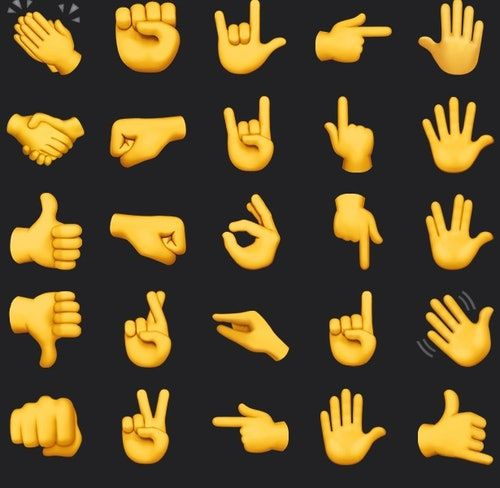
For example, a heart might represent romantic love in one conversation but friendship or appreciation in another. A raised hand might mean “stop,” while in a classroom it could mean “I have a question.”
Even simple symbols such as the thumbs-up or OK gesture can have different cultural interpretations in different places.
This is why context matters.
Symbols in Text Messages
People often use symbols to make messages shorter or more expressive.
Instead of saying “Congratulations,” someone might use a celebration emoji. Instead of writing “I agree,” they might send a check mark or thumbs-up.
Symbols can also change the emotional tone of a message.
For example:
“Okay.”
and
“Okay 👍”
may communicate slightly different feelings depending on the conversation.
In digital communication, these small visual details can make messages feel warmer, friendlier, or more casual.
Symbols on Websites and Apps
Modern websites and apps rely heavily on symbols because users want to understand interfaces quickly.
A magnifying glass usually means search. A gear usually means settings. A bell usually means notifications. A shopping cart represents items you are planning to buy.
These familiar symbols are part of what designers call visual language. The goal is to make technology easier to understand without forcing users to read instructions for every button.
Symbols in Everyday Life
Symbols are not limited to phones and computers.
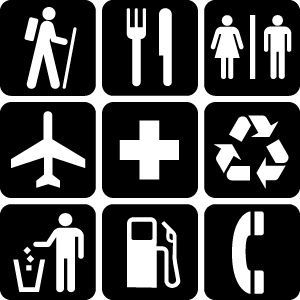
You can find them in supermarkets, airports, hospitals, schools, cars, public transportation, restaurants, and workplaces.
A restroom symbol tells you where to find a bathroom. A recycling symbol indicates recycling information. A battery symbol tells you about a device’s power level. A Wi-Fi symbol indicates wireless network connectivity.
Once you start paying attention, you realize that modern life is filled with visual communication.
How to Understand an Unfamiliar Symbol
If you come across a symbol you do not recognize, do not panic. There are several simple ways to figure it out.
- Look at the surrounding information. Words near the symbol often provide clues.
- Consider where you found it. A symbol on a phone may have a different purpose from one on a road sign.
- Look for a label. Some apps display a description when you move your cursor over an icon.
- Think about the action involved. If the symbol appears beside a button, consider what would logically happen when you click it.
- Check official instructions. For safety-related or technical symbols, use the manufacturer’s documentation or official guidance.
Symbols vs Emojis
Symbols and emojis are closely related, but they are not exactly the same thing.
A symbol generally represents an idea, instruction, object, or concept. An emoji is a visual character designed primarily for digital communication and often represents an emotion, object, person, activity, or idea.
There is some overlap. For example, hearts, arrows, stars, and other characters can function both as symbols and as expressive digital elements.
The important thing is to focus on how the character is being used in context.
Final Thoughts
Symbols make communication faster and more visual. From the simple question mark to the familiar settings gear, these small characters and icons help us understand information without needing long explanations.
Some symbols have very specific meanings, while others can change depending on the situation. Cultural differences, technology platforms, personal relationships, and even the tone of a conversation can affect how a symbol is understood.
The best approach is to look at the context rather than assuming that every symbol has only one meaning.
Whether you are reading a text message, using a smartphone, browsing a website, completing an online form, or simply trying to understand a sign, knowing common symbols can make everyday life a little easier.
And once you learn the basics, you will probably start noticing just how much information we communicate without using words at all.