STY mean in text stands for “Same To You,” the fast reply people send when they want to mirror a greeting, wish, or compliment right back at whoever sent it. It shows up constantly across texting slang, from casual group chats to Snapchat streaks and Instagram DMs, so if you’ve paused mid conversation wondering what those three letters meant, you’re definitely not the only one.
Texting abbreviations move quickly, and missing one can make you feel like you walked into a conversation halfway through. This guide breaks down exactly what STY means in text, where it shows up most often, and how to reply without sounding out of the loop. You’ll also learn the lesser known sarcastic use of STY, its alternate meanings, and when it’s smarter to skip the slang altogether.
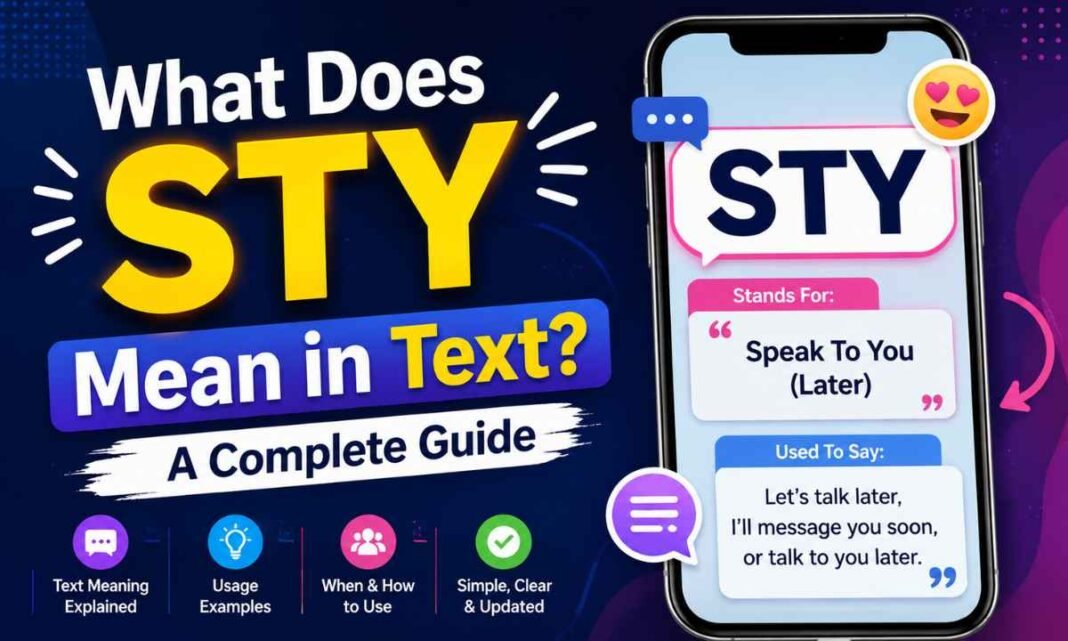
Quick answer: STY stands for “Same To You” and is classified as an initialism, meaning you say each letter on its own (S, T, Y) rather than blending them into one sound.
What Does STY Mean in Text?
In texting, STY usually means “Same To You.” People type it as a fast reply when someone wishes them well, compliments them, or greets them first.
Instead of writing out “same to you” every time, texters shorten it to three letters that carry the same warmth. It’s the kind of slang that saves keystrokes without losing the meaning behind the message.
Example:
A: Have a great weekend! B: STY!
Here, B is simply echoing the same good wish back to A. That’s the whole point of the abbreviation.
Why People Use STY
There are a few practical reasons this short form has stuck around in everyday texting:
- It saves time compared to typing a full sentence
- It keeps the tone light and casual
- It’s common among younger texters, though plenty of adults use it too
- It’s easy to read and understand once you know it
- It works well when you’re replying fast in a busy group chat
In short: STY equals Same To You, a quick way of returning a greeting, compliment, or wish. Some people also search for what does sty mean abbreviation, and the answer stays consistent. It’s an initialism built entirely around reciprocating whatever the other person just said.
Where Is STY Commonly Used?
STY shows up mostly in casual, informal spaces where people text quickly and don’t worry much about grammar. You won’t find it in a cover letter or a client email, but it’s everywhere in day to day chats.
Popular Places You’ll See STY
- Text messages (iMessage and SMS)
- Snapchat
- Instagram DMs
- TikTok comments
- Facebook Messenger
- Discord chats
- WhatsApp conversations
Communication Style
The tone around STY is relaxed and personal. It fits best between friends, classmates, and family members rather than coworkers or people you barely know.
| Situation | Appropriate? |
| Texting friends | Yes |
| Social media chats | Yes |
| Family group chats | Usually |
| School friends | Yes |
| Work emails | No |
| Business messages | No |
| Formal communication | No |
Sty mean in text from a boy or a girl doesn’t really change the core meaning. It still means Same To You in most cases. That said, when it follows a compliment like “you looked great today,” it can carry a flirty undertone depending on who’s texting and what came before it.
This is also part of what people mean when they talk about sty meaning Gen Z, since younger texters tend to use it more freely across almost any casual chat, while older texters may stick to it only with close friends.
Examples of STY in Conversation
Seeing STY mean in text play out in real conversations makes the meaning click faster than any definition could.
Example 1
A: Happy birthday! B: Thanks! STY when your day comes.
Example 2
A: Have an amazing trip! B: STY! Hope you have fun this weekend too.
Example 3
A: Good luck on your exam! B: STY! Good luck with yours too.
Example 4
A: Have a wonderful day. B: STY.
Example 5
A: Merry Christmas! B: STY.
Example 6
A: Hope you feel better soon. B: STY.
Example 7
A: Enjoy your vacation! B: STY.
Notice a pattern here. STY almost always follows something positive, a greeting, a wish, or a compliment aimed right back at the sender.
When to Use and When Not to Use STY
Knowing when STY fits naturally, and when it doesn’t, keeps you from sounding awkward in the wrong setting.
When to Use STY
You can reach for STY when:
- Someone wishes you good luck
- Someone tells you to have a nice day
- Someone sends holiday greetings
- Someone gives you a compliment
- You’re chatting casually with friends
- You want to reply fast without overthinking it
Examples
“Good luck!” becomes “STY!” “Have fun!” becomes “STY!” “Happy New Year!” becomes “STY!”
When Not to Use STY
Skip it when you’re:
- Writing a professional email
- Talking with a client
- Applying for a job
- Sending an official message
- Writing an academic paper
- Speaking with someone unfamiliar with texting slang
Better Alternatives
In those formal situations, swap STY for something like “Same to you,” “Thank you, and you too,” “I appreciate that,” or “Wishing you the same.” These sound far more polished in a professional setting.
Other Meanings of STY in Text
“Same To You” is the most common meaning by far, but STY isn’t locked into just one definition. Context decides everything.
| Meaning | Context |
| Same To You | Most common texting meaning |
| Style | Fashion, appearance, or aesthetic chats |
| Stick To You | Rare, used outside texting |
| Stye (eye infection) | Health related conversations |
| Start The Year | Specific planning discussions |
Worth noting, sty slang style usage pops up specifically in fashion or outfit related messages, and it has nothing to do with returning a greeting. People searching what does sty mean in text urban dictionary are usually trying to confirm whether style, stye, or Same To You is the right read, and honestly, the surrounding sentence is your best clue every time.
There’s also a lesser known but real use of STY as a bit of a sarcastic comeback. If someone sends an insult or a snarky comment, a reply of “STY” can be used to bounce that same energy right back at them, almost like a childish jibe rather than a genuine well wish. It’s not the most common use, but it does exist, and reading the tone of the conversation before it will tell you which version you’re dealing with.
Example
A: Love your sty today! B: Thanks, just threw this outfit together.
Here, “sty” clearly means style, not a returned wish, which is exactly why context always wins over assumption.
Why Is STY So Popular?
Texting culture rewards speed, and STY delivers a full, warm reply using only three letters. That combination of brevity and meaning is exactly why it caught on.
Instead of typing “thank you, same to you,” people shorten it down to something they can send in a second. It fits the same pattern as other classics like LOL for laugh out loud, BRB for be right back, and TTYL for talk to you later. That mix of speed and warmth is exactly why this shorthand has become such a natural habit for so many texters.
Benefits of Using STY
- Faster typing during quick exchanges
- Shorter messages that still feel warm
- Common among younger texters and widely understood
- Easy to read once you know the meaning
- Fits naturally into social media culture
Is STY Friendly, Flirty, or Formal?
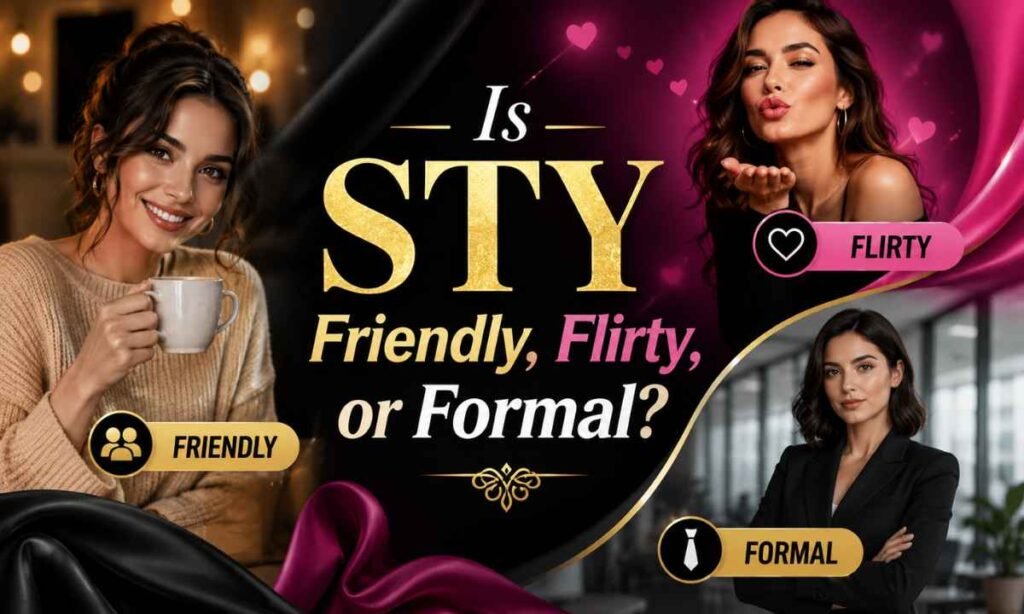
STY on its own is neutral. The tone around it comes entirely from the conversation it’s sitting inside.
Friendly
Most of the time, STY reads as warm and casual. “Have a great day!” followed by “STY” is about as friendly as texting gets.
Flirty
In a conversation that already has a flirtatious edge, STY can pick up that same energy, especially next to a compliment or a playful emoji. The flirtation comes from the message around it, not from the abbreviation itself.
Formal
STY is never formal. If you’re texting a coworker you don’t know well or writing anything official, spell out the full phrase instead.
Similar Slang Words or Alternatives
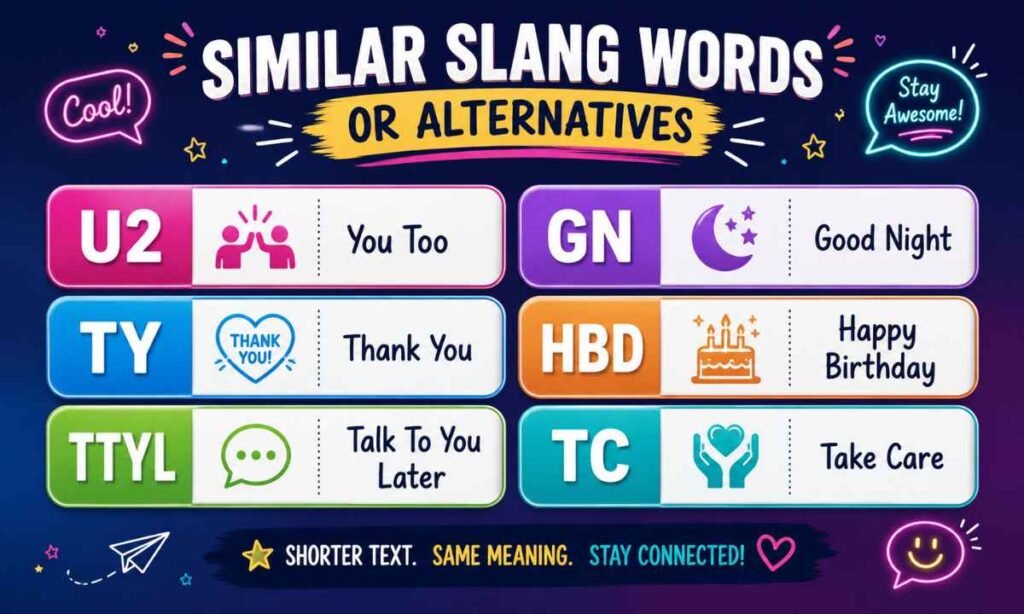
A handful of other texting abbreviations carry a meaning close to STY.
| Slang | Meaning | When to Use |
| U2 | You Too | Quick reply |
| TY | Thank You | Showing gratitude |
| TTYL | Talk To You Later | Ending a chat |
| GN | Good Night | Evening messages |
| HBD | Happy Birthday | Birthday greetings |
| TC | Take Care | Friendly farewell |
It’s also easy to mix up STY with lookalike short forms. What does sry mean in text is actually a completely different term, short for “sorry,” and it has nothing to do with reciprocating a greeting. Similarly, what does stk mean in text usually means “stuck,” which again is unrelated to STY despite the similar look on a small keyboard.
Most Similar Alternative
U2 is probably the closest match to STY. Both exist purely to mirror whatever the other person just said, and they’re often interchangeable in casual chats.
A: Have fun! B: U2!
That means exactly the same thing as replying with STY.
Why Context Matters When Reading STY
Abbreviations rarely have just one fixed meaning, and STY is a good example of why you need to read the full message before assuming anything.
Conversation A
A: Good luck tomorrow! B: STY!
This clearly means Same To You, since it follows a well wish.
Conversation B
A: Nice sty!
This one likely means style rather than Same To You, especially if it’s attached to a photo of an outfit or a room.
Always check the message right before STY appears. If it was a greeting, compliment, or wish, Same To You is almost certainly correct. If it was about clothing or appearance, style is the more likely fit.
Frequently Asked Questions
What is sty slang for?
STY is slang for “Same To You,” used to return a greeting, compliment, or wish in a text.
What is the meaning of sty?
Sty can mean a pigpen or an eye infection, but in texting it almost always means Same To You.
What does sty mean on Instagram?
On Instagram, STY means Same To You, used in DMs and comments to reply to wishes or compliments.
What does styll mean in text slang?
Styll is a stylized form of “still,” used for emphasis. It’s unrelated to STY’s Same To You meaning.
What does sty mean abbreviation?
As an abbreviation, STY stands for Same To You, an initialism said letter by letter: S, T, Y.
Conclusion
STY mean in text comes down to one simple idea: it’s short for “Same To You,” the quick reply people send back after a greeting, compliment, or good wish. Across texting, Snapchat, Instagram DMs, and group chats, it works the same way every time, letting you mirror someone’s energy in just three letters. Knowing when to use it, and when to switch to a more formal alternative, keeps your replies sounding natural in any setting.
Beyond the everyday meaning, STY can occasionally shift to style, a stye on the eye, or even a sarcastic jab depending on what came right before it in the conversation. That’s why context always matters more than the letters themselves. Now that you know exactly what STY means in text, you’ll never have to second guess a reply again.