Yu mean in text most often means “you,” and sometimes “why you,” depending on how the sentence is built around it. If you just got a text that simply said “yu” and paused wondering if it was a typo or some new slang you missed, you’re in the right place. This tiny three letter word shows up constantly in everyday texting, and once you know how to read it, you’ll never have to guess again.
Texting was never meant to follow the rules of formal English, and yu meaning in text is a perfect example of that. It shows up in Snapchat streaks, group chats, TikTok comments, and gaming lobbies, almost always from someone typing fast without overthinking spelling.
Here’s the direct answer before anything else: yu meaning is a casual, shortened spelling of “you,” and this guide walks you through everything else, from tone to platform to punctuation.
What Does YU Meaning in Text?
This shorthand comes down to two main uses in everyday texting. Most of the time it stands for “you,” and occasionally it’s short for “why you,” used when someone is questioning or reacting to something you said.
You’ll notice it most in fast typing situations, where every extra letter slows down the reply. Dropping the “o” from “you” saves half a second, and when you’re texting dozens of messages a day, that adds up.
Here’s a simple way to see both meanings side by side:
| Sentence | What “yu” Means Here |
| “what are yu doing” | You |
| “i miss yu” | You |
| “yu leaving already?” | Why you |
| “yu serious?” | You (reacting with surprise) |
Notice that the surrounding words carry the real weight. On its own, “yu” is neutral. Paired with a question or a reaction, it can lean toward “why you” instead of a plain substitute for “you.”
Where Is YU Commonly Used?
YU shows up mostly in informal digital spaces, not in emails or schoolwork. It belongs to the world of quick replies and casual chatting.
Popular Platforms
You’ll run into this abbreviation most often on:
- Text messages and SMS
- WhatsApp and Facebook Messenger
- Snapchat, especially in quick replies and streaks
- TikTok comments and direct messages
- Discord and in game chats
Each of these platforms rewards speed over polish, which is exactly why shorthand like “yu” fits so naturally there.
Tone & Style
The tone of “yu” is relaxed, friendly, and quick. It reads as informal by default, and it’s common among younger texters who grew up typing on phones instead of writing longhand.
It isn’t rude on its own, but it’s also not something you’d use in a cover letter or a work email. Save the full word “you” for anything that needs to sound polished.
Examples of YU in Conversation
Seeing “yu” play out in real conversation makes the meaning click faster than any definition. Here are a few natural examples.
Casual check-in A: yu there? B: yeah, just got out of class
Friendly and warm A: miss yu already B: same, text me later
Reacting with surprise A: i got the internship! B: yu serious?? that’s huge
Gaming chat A: yu joining the next match? B: give me two minutes
Across all of these, the word itself barely changes. What shifts is the emotion behind it, from happy to surprised to slightly annoyed. That’s the real skill in reading texting slang: paying attention to what surrounds “yu,” not just the word itself.
When to Use and When Not to Use YU
Knowing where “yu” fits keeps your texting natural without making you sound out of place in the wrong setting.
When to Use YU
Use it freely in:
- Group chats and one-on-one texts with friends
- Snapchat or Instagram replies
- Gaming chats where speed matters
- Light, playful conversations
It fits right in when the whole conversation is already casual.
When Not to Use YU
Skip it in:
- Work emails and Slack messages to coworkers
- School assignments or essays
- Messages to teachers, professors, or clients
- Any conversation where you want to sound careful and clear
In these situations, spell out “you” completely. It reads as more respectful and avoids any chance of confusion.
Other Meanings of YU in Text
Beyond the basic “you” swap, the tone behind “yu” can shift depending on spelling and punctuation. Adding extra letters, like “yuu” or “yuuu,” softens the tone and often signals affection, similar to stretching out a word when you talk out loud. A single question mark reads as a genuine check-in, while double question marks usually signal shock or surprise.
It’s also worth noting that “Yu” exists outside slang entirely. It’s a well known surname in Chinese and a common given name in Japanese and Korean naming traditions. If you see “Yu” capitalized as someone’s actual name rather than lowercase inside a sentence, it likely isn’t slang at all.
Similar Slang Words or Alternatives
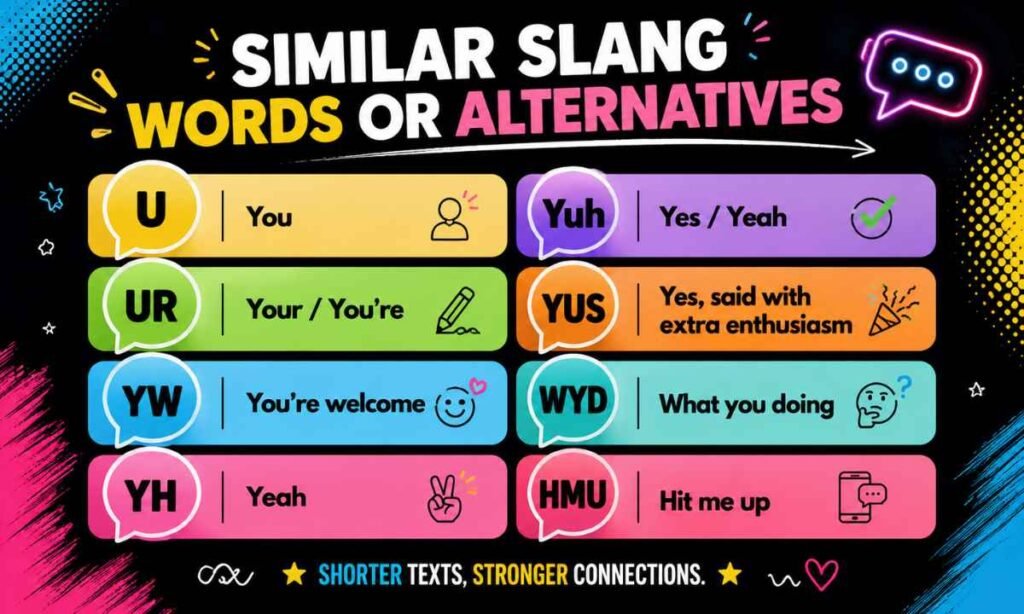
“Yu” belongs to a small family of texting shortcuts that all revolve around the same idea: typing less while saying the same thing.
| Slang | Meaning | Typical Use |
| U | You | The most common and widely recognized shortcut |
| UR | Your / You’re | Casual texting and captions |
| YW | You’re welcome | Quick reply after a thank you |
| YH | Yeah | Casual agreement |
| Yuh | Yes / Yeah | Southern and Gen Z slang for agreement |
| YUS | Yes, said with extra enthusiasm | Excited agreement, often playful |
| WYD | What you doing | Asking about someone’s activity |
| HMU | Hit me up | Inviting someone to reach out |
Among these, “U” is still the most universal alternative, while “Yuh” and “YUS” lean more toward casual agreement than a stand-in for “you.” Knowing this small cluster of terms helps you read a chat’s tone at a glance, without needing to look anything up mid conversation.
Why Do People Use YU in Texting?
People reach for “yu” mostly out of habit and convenience, not because it carries any deeper meaning than “you” does.
Faster Typing
Cutting one letter might not seem like much, but across hundreds of daily texts, shortcuts like this genuinely save time and thumb movement.
Casual Communication
Texting has its own rhythm, closer to spoken conversation than formal writing. Shortened words like “yu” match that relaxed, spoken feel.
Internet Culture
Shorthand spelling has been part of online culture for decades, from early instant messaging to today’s texting apps. “Yu” is simply a current example of a much older trend.
Gaming & Social Media
In fast paced spaces like gaming chats or comment sections, every second counts. Typing “yu” instead of “you” keeps replies quick during live conversations.
Is YU Friendly or Rude?
On its own, “yu” isn’t rude. Whether it reads as friendly, neutral, or sharp comes down entirely to the words and punctuation around it.
Friendly Use
Phrases like “miss yu” or “yu coming? 😄” read as warm and casual, often between friends or partners.
Neutral Use
Something like “yu there?” is simply a plain question, with no strong emotion attached either way.
Slightly Rude Tone
Double punctuation changes things fast. “yu serious??” or “yu what??” can come across as shocked, annoyed, or even a little sharp, depending on what was just said.
Reading tone in text always depends on context, and “yu” is no exception to that rule.
Why Some People Get Confused by YU
Unlike widely known terms like LOL or OMG, “yu” hasn’t reached universal recognition, which is exactly why it still trips people up.
A few reasons this happens:
- It can look like a simple typo at first glance
- Older texters may not recognize it right away
- It’s more common among younger, faster typing users
- Its double meaning (“you” versus “why you”) adds a layer most single word slang doesn’t have
Once you’ve seen it a few times, the confusion fades fast, and context almost always makes the intended meaning obvious.
Yu Mean in Text From a Girl or From a Guy

The meaning of “yu” doesn’t actually change based on who’s sending it. Whether it’s a text from a girl or a guy, “yu” still means “you” in almost every case, and the emotional read comes from tone, punctuation, and the relationship between the two people texting.
That said, context does shift things a little. In a flirty conversation, “miss yu” or “yu okay? 😊” often carries a softer, more affectionate tone no matter who sends it. In a group chat or casual friendship, the same phrase usually just means exactly what it says, with no deeper meaning attached.
What does yu mean Snapchat conversations specifically tends to lean casual and friendly, since Snapchat’s whole design encourages short, quick replies between people who already know each other well.
Frequently Asked Questions
What does “yu” mean in chat?
In chat, “yu” almost always means “you.” It’s a fast, casual spelling used to keep replies quick, and occasionally it means “why you” in a questioning tone.
What is the meaning of yu?
As slang, “yu” means “you.” As a name, “Yu” is a common Chinese surname and a widely used Japanese and Korean given name, unrelated to the texting slang.
What is a yu?
On its own, “yu” isn’t a formal English word. It only carries meaning as casual texting slang for “you,” or as a name in other cultures.
What is yu in English?
In English texting, “yu” is an informal stand-in for “you.” It isn’t a real dictionary word and belongs strictly to casual internet slang.
What does yu mean from a girl?
From a girl, “yu” still just means “you.” Any flirty or affectionate feel comes from context and emojis, not the word itself.
Final Thoughts
Yu mean in text comes down to one simple idea: it’s a quicker, more casual way of writing “you,” with an occasional shift toward “why you” depending on the sentence around it. It fits naturally across texting, Snapchat, TikTok, and gaming chats, anywhere speed and casual tone matter more than perfect spelling.
Knowing when to use it, how tone and punctuation change its feel, and when to spell out “you” instead is really all it takes to use yu meaning correctly. Save the full word for anything formal, lean into “yu” everywhere else, and you’ll read it as naturally as any other everyday text.