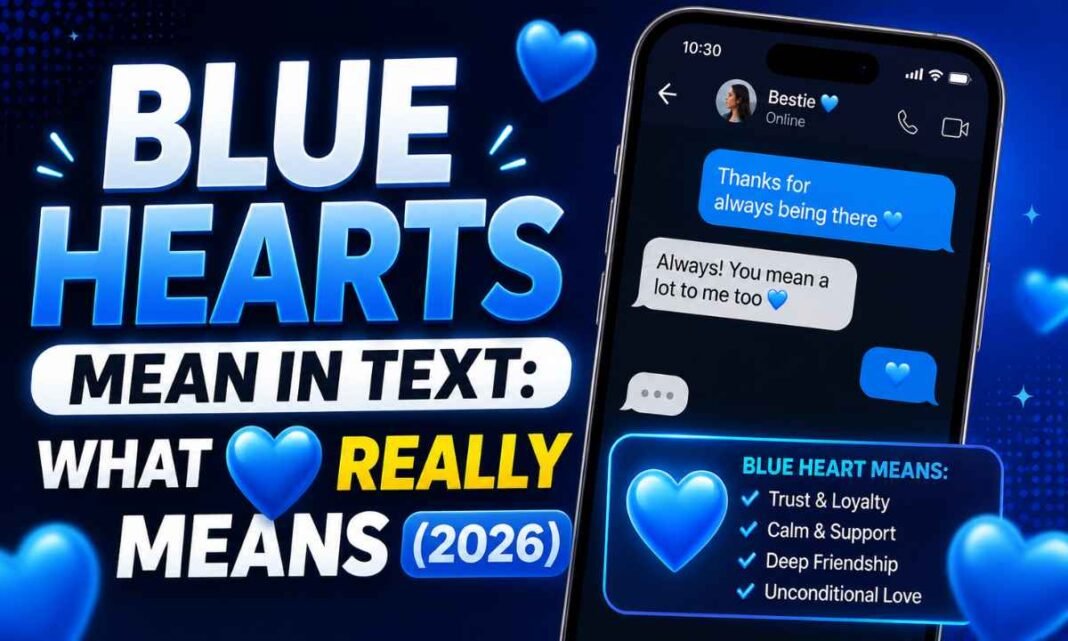
Blue hearts mean in text trust, loyalty, calm affection, and platonic support rather than intense romance. When someone drops a 💙 emoji in your DMs or a group chat, they’re usually telling you they care about you without any romantic pressure attached. It’s one of the gentlest emojis in the whole heart lineup, sitting quietly between friendship and something a little deeper. That’s exactly why so many people reach for it instead of the classic red heart.
Emojis carry tone that plain words often miss, and the blue heart emoji is one of the clearest examples of that. A short text like “thanks for today” can feel flat, but “thanks for today 💙” instantly feels warmer and more personal. Whether it shows up from a close friend, a family member, or someone you’re just getting to know, this small symbol fills in the emotional gap between what someone types and what they actually mean.
Quick answer: The blue heart emoji typically signals friendship, trust, and steady support. It’s less intense than a red heart and more personal than a plain “thanks.”
What Do Blue Hearts Mean in Text?
At its core, the blue heart represents calm, dependable affection. Unlike red hearts, which almost always point to romance, this one points to connection that feels safe and consistent.
The Unicode Consortium added it back in 2010 as part of Unicode 6.0, alongside the first wave of colored heart emojis. Once messaging apps and phone keyboards picked it up, people quickly started assigning it their own emotional shorthand, and “trust and loyalty” became the meaning that stuck.
That history matters more than it might seem. Because the symbol arrived alongside several other colored hearts at once, it never had to compete directly with the red heart for the romance space. Instead, it settled into its own lane almost immediately, which is part of why its meaning has stayed fairly consistent for well over a decade while other slang terms come and go.
Main Interpretations:
- Friendship: A go to symbol for close, platonic bonds.
- Trust and loyalty: Signals reliability and commitment in a relationship or friendship.
- Calm love: Steady affection instead of the passion tied to red hearts.
- Support or solidarity: Common in messages backing a friend, a cause, or a team.
In short, a blue heart in text usually means someone values you, trusts you, or wants to show quiet support, not necessarily romantic interest.
Where Are Blue Hearts Commonly Used?
Blue hearts show up wherever casual digital conversation happens, from group chats to comment sections. You’ll rarely see one in a formal email, but you’ll see plenty in everyday messaging.
Popular Platforms:
- Text messages and iMessage
- WhatsApp and Facebook Messenger
- Instagram comments and DMs
- Snapchat chats
- TikTok comment sections
On Snapchat specifically, this emoji carries an extra layer of meaning. The app’s Friend Emoji system assigns it to mark a strong, steady best friend connection once you’ve been each other’s top Snapchat friend for a while, which is a bit different from the general “trust and loyalty” meaning used everywhere else. That distinction trips people up more than any other, since a Snapchat blue heart is tied to a specific ranking behind the scenes, not just a feeling someone decided to share.
Tone & Style:
The blue heart reads as casual, warm, and low pressure. It fits supportive messages, friendly banter, and comforting replies, but it rarely fits urgent, formal, or serious conversations. Pair it with 😊 for a purely friendly vibe, or with 💋 if you want to nudge the tone toward something flirtier.
Examples of Blue Heart in Conversation
Seeing the emoji in real exchanges makes its meaning click faster than any definition.
Friendship check in A: “You always show up for me 💙” B: “That’s what friends are for”
Comforting a friend A: “Today was rough” B: “Sending you strength 💙”
Team or cause support A: “Big game tonight, let’s go!” B: “Rooting for you all the way 💙”
Family warmth A: “Miss you, mom” B: “Miss you too, sweetheart 💙”
Light romantic hint A: “Thinking about you today” B: “💙”
Notice how none of these examples scream romance. They lean toward comfort, encouragement, and closeness instead. Even the last one, where the reply is nothing but the symbol itself, still lands as warm rather than passionate. That’s the pattern worth remembering: the emotional weight sits in the words around it, and the emoji simply confirms the tone.
When to Use and When Not to Use Blue Hearts
Context decides whether a blue heart lands well or feels out of place. A quick gut check before sending usually saves confusion later.
When to Use 💙 Blue Heart
- Thanking a friend or showing appreciation
- Comforting someone going through a hard time
- Supporting a team, cause, or community
- Keeping a family text warm and casual
- Adding gentle affection without romantic weight
When Not to Use 💙 Blue Heart
- Formal emails or workplace announcements
- Urgent messages that need a clear, direct tone
- Serious disagreements or conflict resolution
- Expressing strong romantic feelings, where ❤️ fits better
Other Meanings of Blue Hearts
Beyond friendship, blue hearts pick up a few extra shades of meaning depending on who’s sending them and why.
| Context | Example Phrase | What It Signals |
| Autism awareness | “Wearing blue today 💙” | Support for autism awareness campaigns |
| Sports and team pride | “Go Blue!” 💙 | Loyalty to a team wearing blue colors |
| Brand or fandom support | “New drop looks amazing 💙” | Appreciation for a brand or creator |
| Subdued mood | “Feeling a little blue today 💙” | A calmer, low key emotional state |
| Patriotic posts | “Proud to be American 💙” | National pride, often paired with other colors |
That last row matters because it’s often overlooked. Blue has long been tied to the phrase “feeling blue,” so the emoji can occasionally carry a quieter, more reflective undertone rather than pure warmth. If a friend sends it alongside a message about a rough week, they may not be asking for support in an obvious way, but they’re likely opening the door for you to check in.
Brands have picked up on these layered meanings too. Companies with blue in their logo, along with sports teams whose colors include blue, often encourage fans and customers to use the emoji as a quick, low effort way to show loyalty online. It costs nothing to type, yet it still reads as a genuine show of support.
Similar Emojis or Alternatives
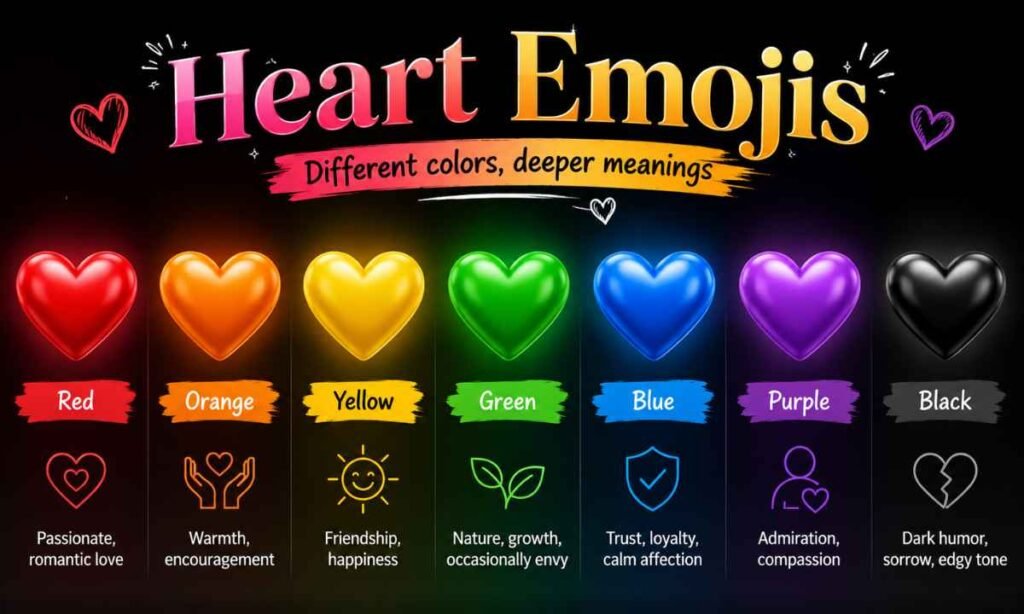
Every colored heart emoji carries its own personality, and knowing the differences helps you pick the right one.
| Emoji | Meaning | Best Used For |
| ❤️ Red Heart | Passionate, romantic love | Partners, deep romantic feelings |
| 🧡 Orange Heart | Warmth, encouragement | Friendly appreciation, gratitude |
| 💛 Yellow Heart | Friendship, happiness | Close friends, cheerful messages |
| 💚 Green Heart | Nature, growth, occasionally envy | Environmental themes, playful teasing |
| 💙 Blue Heart | Trust, loyalty, calm affection | Friendship, support, steady bonds |
| 💜 Purple Heart | Admiration, compassion | Gentle affection, appreciation |
| 🖤 Black Heart | Dark humor, sorrow, edgy tone | Sarcastic or moody messages |
So what does ❤ 🧡 💛 💚 💙 💜 🖤 mean altogether? Each one shifts the emotional temperature of a message, moving from intense romance on the red end to calm loyalty in the middle and darker or edgier tones toward black. Blue sits comfortably in the middle, favoring warmth over intensity.
Why People Use Blue Hearts in Texting
People reach for the blue heart because it says a lot while risking very little misunderstanding.
Shows Trust and Loyalty
Blue hearts communicate reliability. They tell the other person you’re dependable, not just affectionate in the moment.
Works for Friends and Family
Because it avoids romantic overtones, the blue heart works cleanly for parents, siblings, and close friends without sending mixed signals.
Casual & Relatable
It feels natural in everyday chats, adding warmth without sounding overly dramatic or forced.
Social Media-Friendly
Short on space but big on meaning, blue hearts fit perfectly in captions, comments, and quick replies where a full sentence would feel like too much.
Flexible Tone
Pair it with other emojis and its personality shifts slightly, from playful to comforting to quietly supportive, all without changing the core message of care. A single symbol can do the work of an entire sentence, which is exactly why it has stayed popular across so many different age groups and platforms.
Is the Blue Heart Romantic or Platonic?
Mostly platonic, but not always. The surrounding words and relationship context decide where a blue heart lands on that spectrum.
Friendly
“Thanks for listening 💙” reads as pure appreciation, nothing more.
Neutral
“Go team 💙” is about solidarity, not personal feelings toward one individual.
Light Romantic
“Can’t stop thinking about you 💙” softens romantic interest into something calmer and less intense than a red heart would suggest.
Blue Heart Meaning From a Girl vs From a Guy
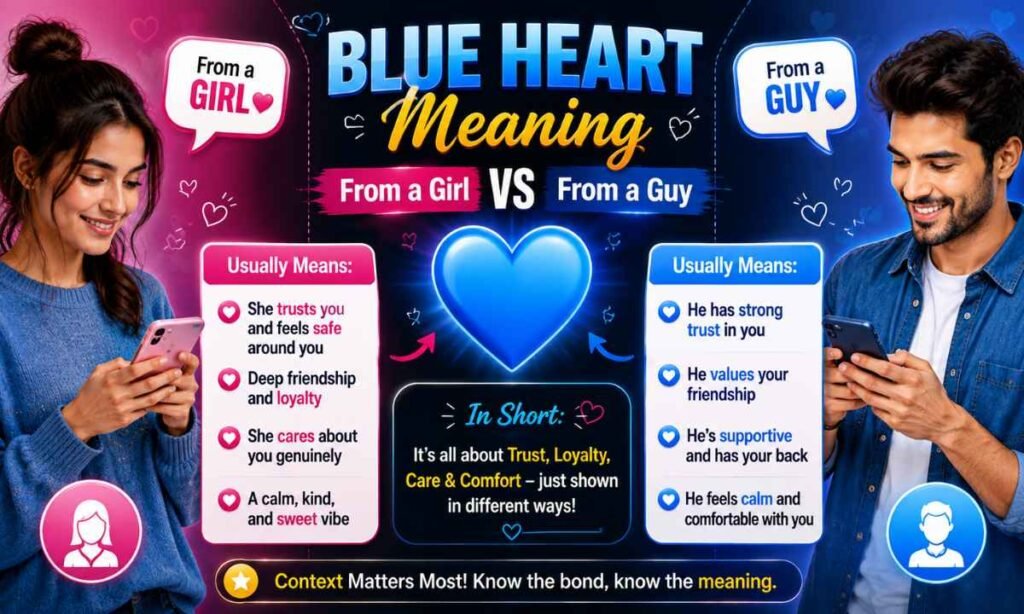
From a girl, this usually leans toward warmth, support, or genuine friendship, especially between close friends. When it comes from a girl to a guy, it often signals comfort and trust without romantic intent, though tone and history between the two people still matter.
From a guy, it tends to carry that same platonic energy. Guys often use it to avoid seeming overly intense, especially early in a friendship or when they’re unsure how the other person feels. From a boy to a girl he likes, it can be a gentle, low pressure way of showing interest without fully committing to a red heart.
Blue Heart Meaning in Relationship
Inside an established relationship, the meaning shifts slightly. Couples sometimes use it to express calm, steady love rather than the fiery tone of a red heart, especially during quieter moments like a simple goodnight text, where deep affection doesn’t need to be loud to feel real.
Frequently Asked Questions
What does 💙 mean in texting?
A blue heart in texting means trust, loyalty, and calm affection. It’s a friendly, supportive symbol rather than a romantic one, unlike the red heart.
Does 💙 mean friendzone?
Not necessarily. A blue heart usually shows platonic warmth or caution, not rejection. Context and the rest of the conversation matter more than the emoji alone.
What does it mean when a guy sends 💛 💙 💜 💚 ❤️ emojis?
Sending multiple colored hearts usually shows layered feelings like friendship, trust, admiration, and romance all at once, depending on the relationship.
What does a blue heart mean from a girl?
From a girl, a blue heart usually signals genuine friendship, comfort, or trust. It rarely implies romance unless the rest of the message suggests otherwise.
What does 3 blue hearts mean?
Three blue hearts add emphasis to platonic support or loyalty, similar to saying “thank you so much” instead of just “thanks.” It stays friendly, not romantic.
Final Thoughts
Blue hearts mean in text something simple but meaningful: trust, loyalty, and calm affection that doesn’t demand romance. Whether it shows up on Snapchat, WhatsApp, or a quiet text from a friend, the 💙 emoji signals genuine care without any emotional pressure attached. From friendship and support to light romantic hints, its meaning always stays warm rather than intense.
Context is everything when it comes to a blue heart emoji, whether it’s from a girl, a guy, a family member, or someone you’re building a relationship with. The next time you see a 💙 land in your inbox, you’ll know it’s less about passion and more about genuine, steady care that means something real.